
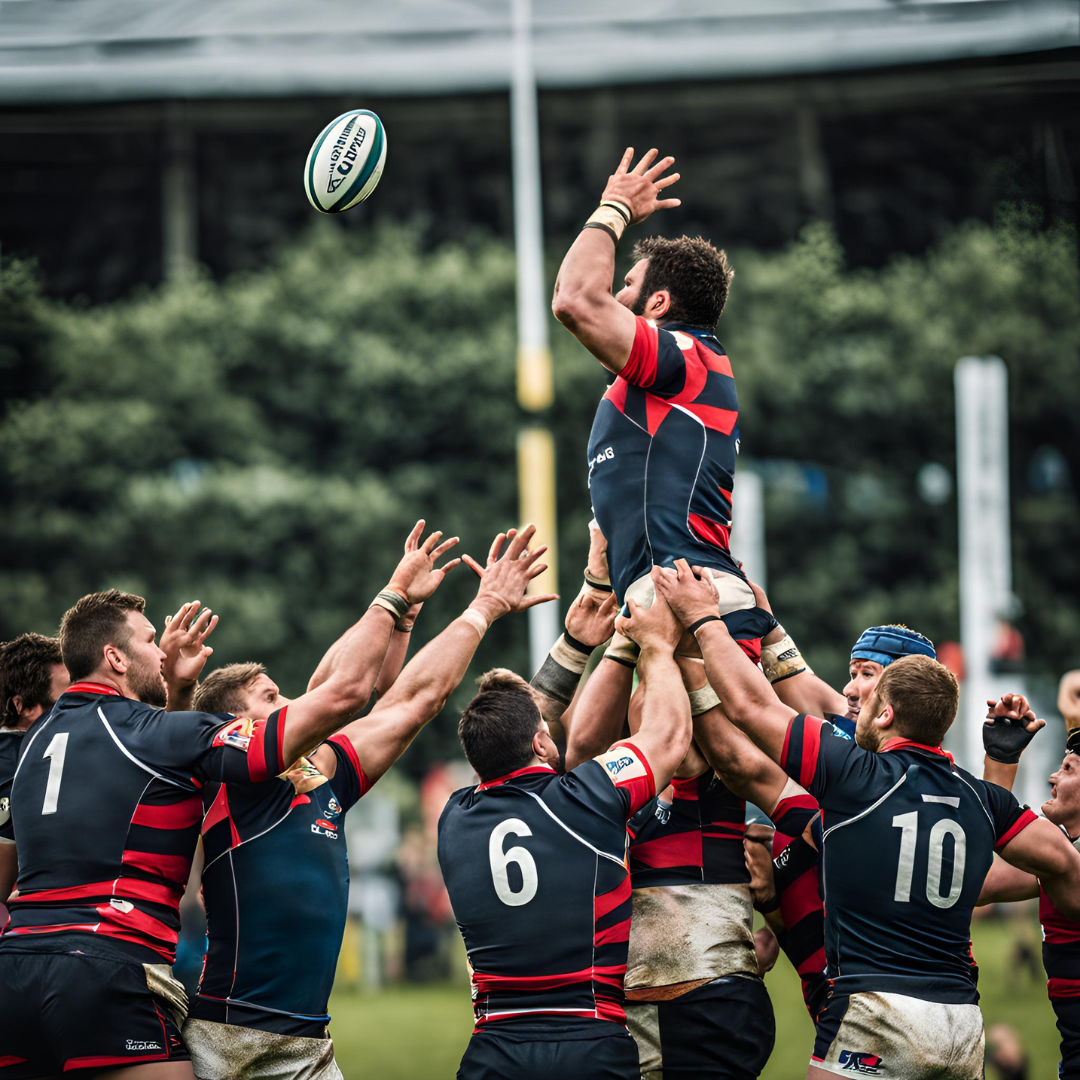
Rugby Lineouts: A Key Set Piece Explained
In rugby, lineouts are one of the sport’s most important and distinctive set pieces. Used to restart play after the ball has gone out of bounds, it involves a contest between two teams as they try to win possession of the ball. While it may seem like a simple throw-in, the lineout is a highly strategic element of the game that requires coordination, timing, and skill. This article delves into the basics of rugby lineouts, explaining how they work, the roles of players, and the tactics used to win possession.
Check out our Rugby 101 post here to start with the entire game.
What Is a Lineout?
A lineout occurs when the ball goes into touch (out of play along the sideline, or “touchline”). To restart play, players from both teams line up perpendicular to the touchline, forming two parallel lines. The team that did not knock or kick the ball out is usually awarded the throw-in. The ball is thrown back into play by the hooker, and the players from both teams jump to catch or tap the ball down to their teammates.
The lineout is a contested set piece, meaning both teams can compete for the ball. However, it’s often a key opportunity for the team with the throw-in to gain possession and launch an attacking phase.
Setting Up a Lineout
To set up a lineout, each team sends between two and seven players, depending on the strategy and field position. The number of players is chosen based on whether the team wants to make the lineout quick, set up for a more complex play, or counter the opposition’s setup.
Here’s how the players are typically arranged in a lineout:
The Jumpers: These players are often tall, athletic forwards who have the job of catching or tapping the ball. The locks (second row) are commonly the main jumpers because of their height and strength.
The Lifters: Two teammates, usually props and back-row players, support the jumper by lifting them into the air. Timing is crucial here, as the lifters must hoist the jumper at the right moment to reach the ball first.
The Thrower: The hooker is usually responsible for throwing the ball into the lineout. A good throw must be accurate, as any throw that’s too long, too short, or not straight can lead to a turnover.
The Receivers: Once the ball is won, the team’s designated receiver—often the scrumhalf or another forward—must quickly distribute the ball to the backs or set up a driving maul.
Tactics and Variations in Lineouts
The lineout is not just a physical contest; it’s also a battle of strategy and deception. Teams use various tactics to outwit the opposition and secure possession.
Movement and Dummy Jumps: Players in the lineout often move before the ball is thrown to confuse the defenders. Dummy jumps, where players fake an attempt to catch the ball, are used to draw the opposing team off balance and create space for the actual jump.
Short Lineouts: Sometimes teams will opt for a short lineout, involving fewer players. This tactic is used to create a quicker restart and leave more players available in open play.
Mauls: If a team wins the ball in a lineout, they can form a driving maul. In a maul, the ball carrier is supported by teammates who bind together and drive forward, making it difficult for the opposition to stop the play without committing a foul.
The Importance of Lineouts in Rugby
Lineouts are crucial in rugby because they provide an opportunity to regain possession and build an attack. A well-executed lineout can lead directly to a try-scoring opportunity, especially when combined with a driving maul or quick passing play.
Defensively, a team’s ability to disrupt the opponent’s lineout can prevent the opposition from gaining an advantage. Winning an opposition lineout can shift momentum and put the team in a strong attacking position.
Common Challenges and Solutions
Lineouts can be contested and complex, leading to several challenges:
Poor Throws: Inaccurate throws can result in turnovers or penalties. Teams mitigate this by practicing precision and using experienced throwers.
Defensive Pressure: Opposing teams may apply intense pressure to disrupt the throw or knock the ball down. Effective communication and robust lifting techniques help counteract this pressure.
Timing Issues: Synchronizing jumps and lifts requires precise timing. Regular drills and strong teamwork are essential to ensure seamless execution.
Lineouts are a key part of rugby, blending athleticism, strategy, and teamwork. While they may only last a few seconds, the outcome of a lineout can significantly influence the flow and outcome of a game. Understanding how lineouts work, the roles of the players involved, and the tactics employed gives fans and players alike a deeper appreciation for this essential aspect of rugby.

Leave a Reply