
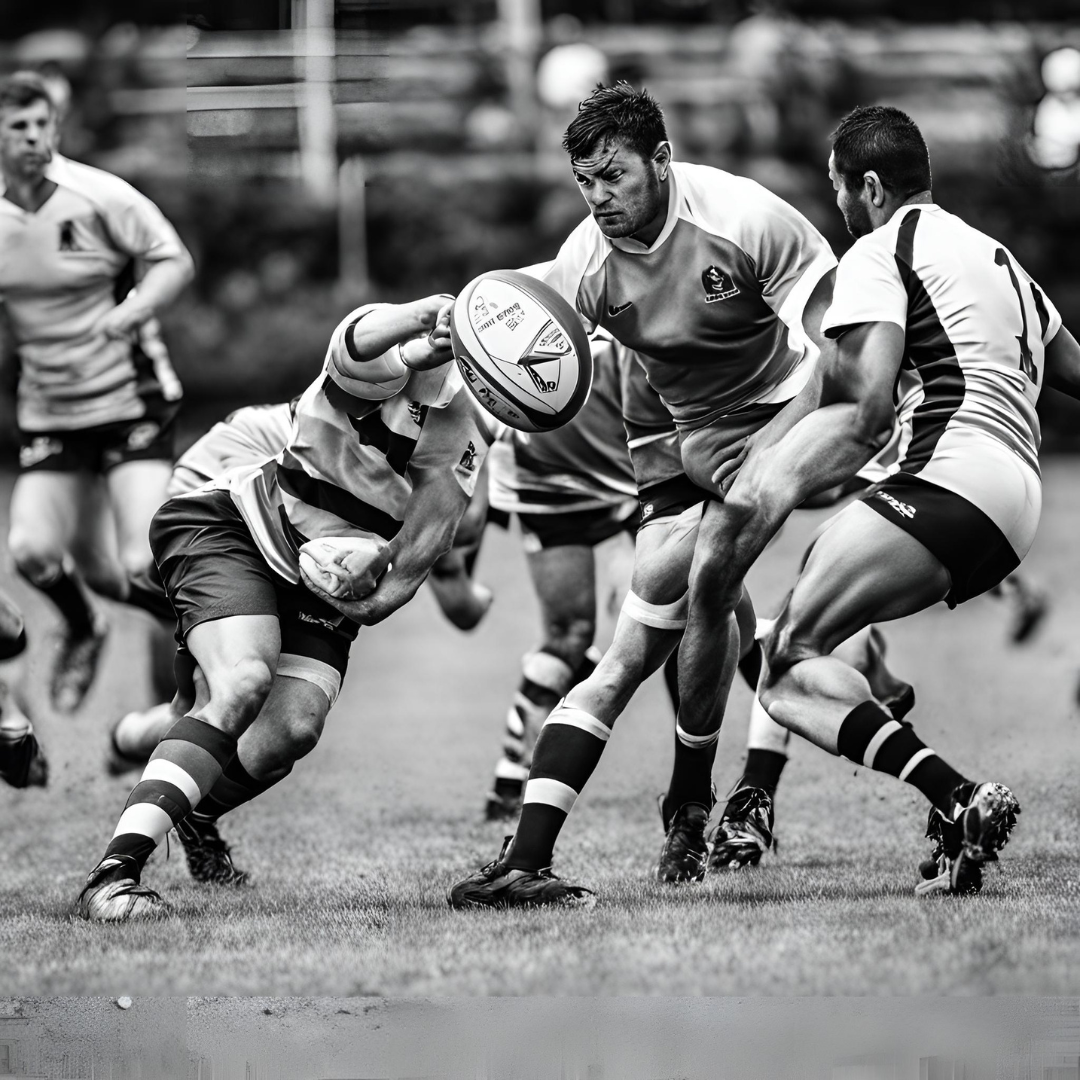
The Art of Passing in Rugby: Techniques, Types, and Importance
Passing is one of the most fundamental skills in rugby. It enables teams to move the ball across the field, create space, and ultimately score tries. While it may seem simple on the surface, passing in rugby involves a range of techniques, tactical decisions, and precision that can be the difference between success and failure on the field. This blog will explore the mechanics of passing, the various types of passes used in rugby, the importance of timing and decision-making, and how passing contributes to team dynamics and overall game strategy.
Check out our Rugby 101 post here to start with the entire game.
The Basics of Passing in Rugby
At its core, a rugby pass involves transferring the ball from one player to another, typically using both hands to propel the ball in a lateral or backward direction. One key aspect of rugby passing, unlike sports like American football or soccer, is that the ball must always be passed backward or laterally. Forward passes are not allowed, and any violation results in a scrum for the opposing team. This backward passing rule adds a unique challenge to the game, as players must advance while keeping the ball moving backward, requiring excellent spatial awareness, timing, and coordination.
Grip and Hand Position: A correct grip is essential for executing an accurate pass. The player should hold the ball with both hands, fingers spread wide across the seams, ensuring control and stability. The thumbs are placed underneath the ball, providing support, while the other fingers wrap around the sides to generate power during the pass. A relaxed grip allows the player to rotate the ball as it leaves their hands, giving it a spiral trajectory that enhances both speed and accuracy.
Body Position: Proper body position is crucial for delivering a clean pass. Players should keep their bodies low, with knees bent and their weight balanced. This stance allows for greater stability and enables the player to pivot and adjust the angle of the pass. By positioning their body in the direction of the intended target, the passer can generate power from their core and legs, adding accuracy to the pass.
Follow Through: The follow-through of the pass is as important as the grip and initial throw. Once the ball is released, the hands should follow through in the direction of the intended target, with the wrists flicking to create spin on the ball. This motion not only adds velocity to the pass but also ensures that the ball travels in a straight line to the receiver.
Types of Passes in Rugby
There are several different types of passes in rugby, each with its own specific application depending on the situation, distance, and defensive pressure. Here are some of the most commonly used passes:
Standard Pass (Spin Pass): The spin pass is the most common type of pass in rugby and is used to quickly move the ball across the field. In a spin pass, the ball is thrown with a spiral rotation, making it travel faster and more accurately over longer distances. The spin pass is usually performed with both hands, and the player flicks their wrists to create spin, which keeps the ball stable in flight.
When to Use: The spin pass is effective when the ball needs to cover a longer distance, typically from one player to another on the outside, or to exploit a gap in the defense. It’s commonly used in backline play when quick distribution is required.
Pop Pass: The pop pass is a short, quick pass typically delivered over a very short distance, often from one forward to another. It’s a soft, floating pass that “pops” the ball into the hands of a teammate. Because the pass is slower and requires less force, it’s ideal for close-range play, particularly in the forwards.
When to Use: The pop pass is often used in tight areas around the ruck or maul, where players are in close proximity. It’s also used to offload the ball in contact, allowing the team to maintain forward momentum.
Flat Pass: A flat pass travels parallel to the defensive line with little arc, reducing the amount of time defenders have to adjust and intercept the ball. A flat pass is delivered quickly and with force, often requiring the receiver to catch the ball at high speed.
When to Use: The flat pass is most effective when a team wants to move the ball quickly across the field without losing momentum. It’s commonly used in attacking phases when players are running at pace and looking to break the defensive line.
Switch Pass: In a switch pass, the ball carrier changes direction just before passing to a teammate who is running toward them at an angle. This movement can confuse the defense, creating space for the player receiving the pass to exploit.
When to Use: The switch pass is used to deceive defenders, particularly when they have committed to covering the initial direction of the ball carrier. It is often used by fly-halves or centers to change the point of attack and create gaps in the defensive line.
Loop Pass: In a loop pass, the player who passes the ball immediately runs behind the receiver and gets the ball back in a second pass. This play is used to outnumber the opposition and create overlap situations where the attacking team can gain an advantage.
When to Use: The loop pass is a common attacking tactic, especially in backline play, as it allows the ball carrier to move into space or gain a numerical advantage against the defensive line.
Offload: An offload occurs when the ball carrier passes the ball while being tackled, typically just before hitting the ground. The goal of the offload is to keep the play alive and prevent the attacking momentum from being halted by the tackle.
When to Use: Offloads are most effective in broken play situations or when the attacking team is trying to maintain quick ball movement and catch the defense off-guard. They require excellent timing and spatial awareness.
The Importance of Timing and Decision-Making
While technical proficiency in passing is crucial, equally important is the timing and decision-making behind each pass. A well-timed pass can break down a defensive line, create an overlap, or exploit space, while a poorly timed pass can result in turnovers or missed opportunities.
Timing: Timing is essential to ensure the pass reaches the receiver at the right moment, allowing them to catch the ball in stride and continue the play without losing momentum. Passing too early or too late can disrupt the attacking flow and give the defense time to reset. For example, a pass to a winger just before they reach the defensive line can give them the space they need to break through or take on a one-on-one challenge.
Decision-Making: Decision-making is about reading the game and understanding when and where to pass the ball. Players must assess the positioning of both their teammates and the opposition, deciding whether to pass, run, or kick. In high-pressure situations, the best pass is not always the most obvious one. Sometimes a short pop pass or a switch can unlock a defense, while at other times, holding onto the ball and drawing in defenders before passing can create space for other players.
Risk vs. Reward: Passing also involves managing the balance between risk and reward. Longer passes, such as the spin pass, can move the ball quickly across the field but may be more prone to interception or handling errors. On the other hand, shorter passes are safer but might not create the necessary attacking opportunities. A good passer must assess the level of risk and determine whether the potential reward justifies the attempt.
Passing and Team Dynamics
Passing is not just about individual skill; it is an essential part of a team’s attacking strategy. A well-coordinated passing game relies on communication, trust, and teamwork. Every player must understand their role in the attacking structure, whether they are the ball carrier, the receiver, or a supporting runner.
Communication: Good communication is key to a successful passing game. Players must call for the ball, signal their intentions, and work together to move the ball efficiently. Without clear communication, the risk of miscommunication and dropped passes increases.
Support Play: Passing is only effective if the receiving player is in the right position to catch the ball and continue the attack. Supporting players must be aware of where the ball carrier is and be ready to receive the ball at any moment. They must also be prepared to offer options to the ball carrier, whether through running lines, offloads, or switches.
Conclusion: The Lifeblood of Rugby Attack
Passing is the foundation of a team’s attack in rugby, allowing players to move the ball across the field, create opportunities, and exploit weaknesses in the defense. Mastering the various types of passes, understanding the importance of timing and decision-making, and working as part of a cohesive team are all essential elements of a successful passing game. Whether it’s a short pop pass in a tight ruck or a long spin pass to a winger in space, passing is the key to unlocking the full potential of a rugby team’s attack.

Leave a Reply