
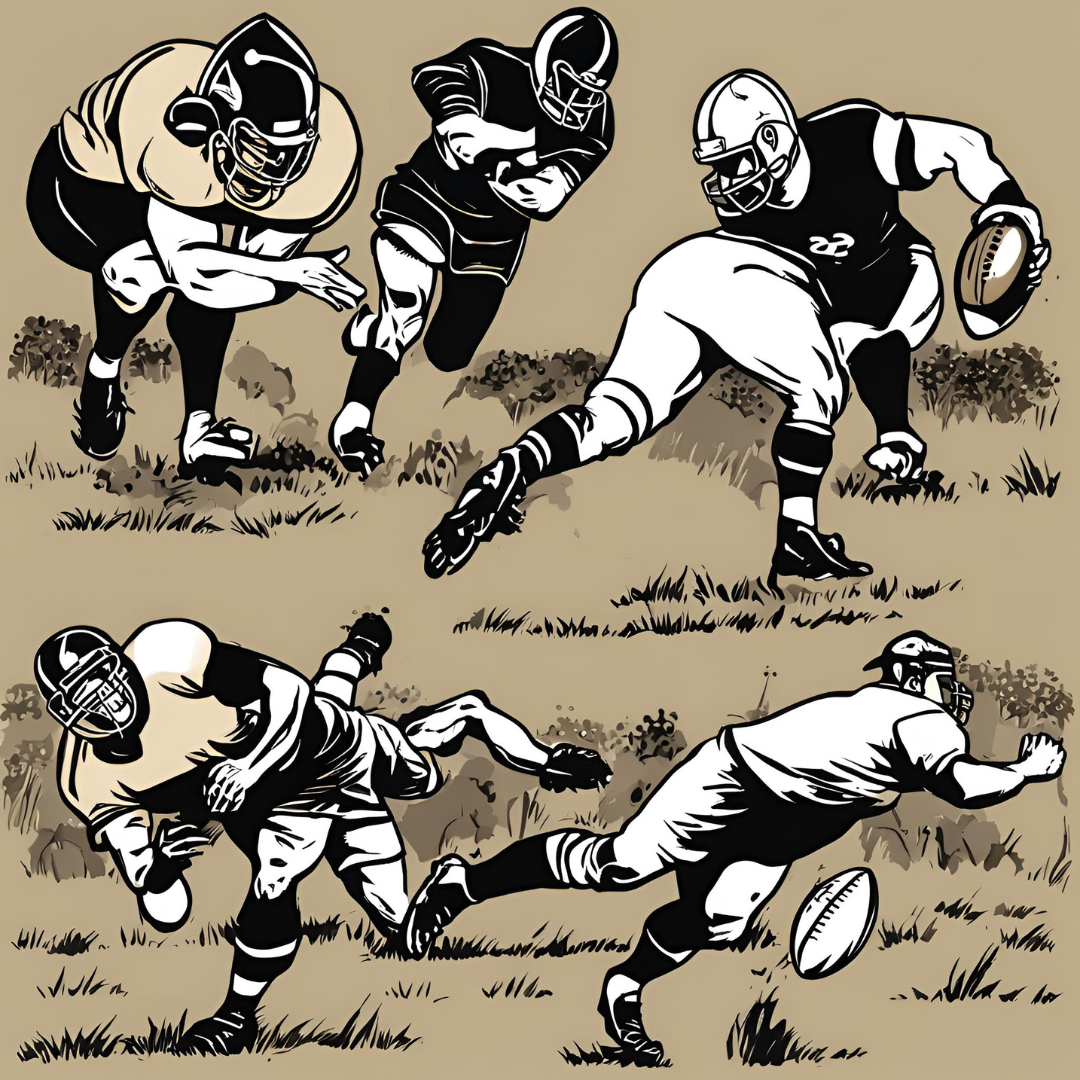
Rugby vs. American Football: What North America Can Learn from Both Sports
In the pantheon of sports, few inspire the same level of intensity, tradition, and global fanfare as rugby and American football. Both sports are rich in history and culture, yet their paths have been distinctly divergent, particularly in North America. Rugby, with its origins in England, has steadily grown into a globally popular sport, while American football, a derivative of rugby itself, has become a cultural juggernaut in the United States. Despite their differences, both offer important lessons in athleticism, teamwork, strategy, and culture that North America could benefit from by examining the best of each.
The Origins and Evolution of Rugby and American Football
To truly understand what North America can learn from both rugby and American football, it’s helpful to start with a bit of history. Rugby originated at Rugby School in England during the early 19th century, where legend has it that a student named William Webb Ellis picked up the ball during a football match and ran with it. From this humble beginning, rugby expanded rapidly, spreading through the British Empire and becoming a major sport worldwide. Its two primary forms—Rugby Union and Rugby League—developed from disagreements over the rules, with Union typically being the more popular of the two globally.
American football, on the other hand, evolved out of rugby in the United States. In the late 19th century, universities such as Harvard, Yale, and Princeton played early forms of rugby before tweaking the rules to better suit their tastes, eventually leading to the development of the distinct sport we know today. The key modifications, such as the forward pass and downs system, created a more strategic and tactical game. As a result, American football grew into the multimillion-dollar industry it is now, with the National Football League (NFL) as one of the world’s most lucrative sporting organizations.
Despite these different trajectories, rugby and American football share common origins that still influence how the games are played today. This shared history also provides valuable opportunities for cross-pollination between the sports, especially in the context of North American sports culture.
Athleticism and Physicality: A Comparative Analysis
One of the most immediate comparisons between rugby and American football lies in the athletic demands placed on players. Both sports require a high level of fitness, strength, and endurance, but the specific demands vary greatly.
In rugby, players must maintain a continuous level of exertion. Unlike American football, where play is frequently paused between downs, rugby involves a near-constant flow of action. This requires players to have exceptional cardiovascular fitness and the ability to handle prolonged periods of physical strain. Tackling in rugby, while no less aggressive, does not involve the same level of protective equipment seen in American football, leading to a different approach in terms of technique. Rugby players are often trained to tackle lower and more efficiently to minimize injury.
American football, by contrast, is more stop-and-start, with bursts of high-intensity action punctuated by breaks between plays. This allows players to focus on short, explosive movements, making the game incredibly tactical and based on set plays. The physicality in American football is often more jarring, with bigger hits due to protective padding and helmets. However, the reliance on protective gear has also led to debates about safety, with a growing concern over concussions and chronic traumatic encephalopathy (CTE) linked to head injuries.
Lesson 1: Adopting Rugby’s Approach to Player Safety
One of the most important lessons American football can learn from rugby is how to prioritize player safety while maintaining the physical nature of the game. Rugby players, despite the lack of protective gear, suffer fewer concussions due to the tackling techniques enforced in the game. Instead of head-on collisions, rugby teaches players to use their shoulders, and there’s an emphasis on avoiding dangerous high tackles. Adopting these techniques could improve safety in American football, potentially reducing the alarming rates of head injuries.
Strategy and Tactics: Intellectual Depth in Both Games
Rugby and American football are often celebrated for their strategic depth, but the way strategy is implemented differs significantly.
Rugby’s flowing nature means that strategy must be adaptable in real-time. There’s less room for pauses and adjustments, so teams need to think on their feet. Rugby often emphasizes ball possession, positioning, and stamina, with tries scored through coordinated team play rather than individual heroics. Decision-making is typically in the hands of players on the field, particularly the scrum-half and fly-half, who direct the team’s offensive and defensive efforts.
American football is known for its highly structured nature. The stoppage after each down allows teams to regroup and plan the next play, giving coaches a direct role in strategy. The game’s complexity is reflected in the thick playbooks used by teams, filled with meticulously crafted plays designed to exploit an opponent’s weaknesses. This level of preparation and planning is one of the reasons American football has been dubbed “chess with bodies.”
Lesson 2: Combining Real-Time Adaptability with Structure
North American sports could benefit from incorporating more of rugby’s in-the-moment adaptability while retaining the deep, strategic framework of American football. In rugby, players are forced to make quick decisions based on the dynamic flow of the game. If North American teams, especially in American football, could find ways to emphasize player decision-making within the structured playbook format, it could lead to more engaging, fluid games while still maintaining the intellectual challenge of strategic planning.
Culture and Values: Rugby’s Global Inclusivity vs. American Football’s Commercial Success
Culturally, rugby and American football occupy different spaces in the global consciousness. Rugby, particularly Rugby Union, is played and followed in many countries, from England and New Zealand to South Africa and Japan. The sport prides itself on its inclusivity and the spirit of sportsmanship, often summed up in the phrase “rugby values.” The sport emphasizes respect for the opposition, the referee, and the game itself. This is reflected in the behavior of both players and fans, who typically foster a strong sense of camaraderie, even between rival teams.
American football, by contrast, has grown into a massive commercial enterprise. The Super Bowl is one of the most-watched sporting events globally, and NFL players are some of the highest-paid athletes in the world. While the culture around the sport can be highly competitive and at times aggressive, it has also become an essential part of American life. Tailgating, team rivalries, and fantasy football leagues have created a unique fan culture that thrives on spectacle and drama.
Lesson 3: Merging Rugby’s Sportsmanship with American Football’s Commercial Appeal
North America can learn from rugby’s emphasis on sportsmanship and inclusivity, integrating these values into the hyper-competitive, commercialized world of American football. At the same time, rugby, particularly in North America, can take a page from the NFL’s playbook when it comes to marketing, community engagement, and fan experience. The combination of rugby’s global values with American football’s commercial prowess could create a healthier, more vibrant sports culture.
The Big Guy’s Final Thoughts
In the end, both rugby and American football have much to offer North America. Rugby’s focus on continuous play, real-time adaptability, player safety, and values of respect and inclusivity provide a refreshing contrast to American football’s structured, tactical, and commercially driven nature. By blending the best aspects of both sports, North America could foster a sporting landscape that is both safer and more inclusive, while still maintaining the spectacle and excitement that fans love.

Leave a Reply