
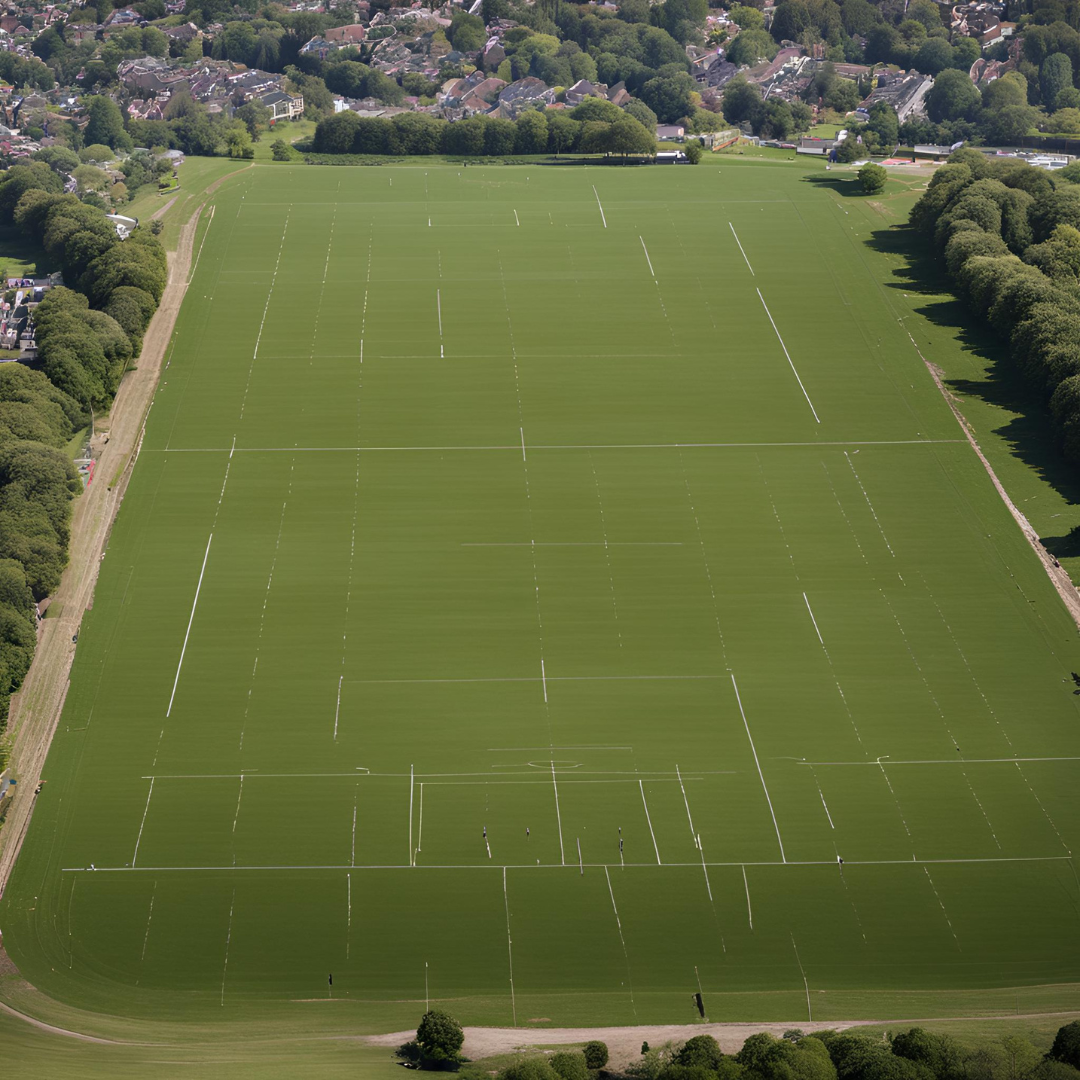
A Guide to the Rugby Union Pitch: Dimensions and Key Features
The pitch in rugby union is the battlefield where all the action unfolds, and understanding its layout is essential for players, coaches, and fans alike. The field’s size, markings, and zones not only affect the flow of the game but also contribute to its strategic complexities. In this guide, we’ll explore the key features and dimensions of a rugby union pitch and their significance in the sport.
Check out our Rugby 101 post here to start with the entire game.
Dimensions of a Rugby Union Pitch
The size of a rugby union pitch can vary slightly, but it is typically 100 meters long and 70 meters wide. These dimensions create a large, open space for play, emphasizing both physicality and skill.
- Length: The total length of the playing area is 100 meters between the two goal lines, with an additional 22 meters at each end for the in-goal areas (try zones).
- Width: The field is 70 meters wide, providing ample space for attacking moves and defensive formations.
- In-Goal Areas: The in-goal areas, where tries are scored, extend 10-22 meters behind each goal line.
The size of the pitch allows for expansive play, with plenty of room for players to run, pass, and create opportunities. Unlike American football, rugby union has continuous play with fewer stoppages, so the dimensions also test the stamina and positioning of players throughout the match.
Key Markings on the Pitch
The rugby union pitch is marked with several lines and zones that dictate the rules of play and impact game strategy.
Halfway Line
The halfway line divides the pitch in half and serves as the starting point for each half of the game and after a score. Teams often use the halfway line as a reference for their defensive structure, aiming to keep their opponents in their half of the field.
22-Meter Line
The 22-meter line is crucial in rugby union strategy. It is located 22 meters away from each team’s goal line. Teams often use this line as a marker for kicking tactics—once inside the 22, a team can kick directly into touch (out of bounds) without losing possession. Defending teams aim to keep the attacking side out of this area, as it limits the offensive team’s kicking options.
Try Line
The try line (or goal line) is the line players must cross to score a try. Positioned at each end of the pitch, this line stretches across the width of the field. The area between the try line and the dead-ball line is called the in-goal area, where a try is completed when a player grounds the ball.
5-Meter and 15-Meter Lines
These lines are marked parallel to the touchlines (sidelines). The 5-meter line is important for scrums and lineouts, as it indicates the minimum distance from the touchline where these can occur. The 15-meter line marks the outer boundary for where lineouts are thrown. These lines help referees ensure that players and plays are adhering to the game’s laws.
Dead-Ball Line
The dead-ball line marks the back of the in-goal area, indicating the field’s end. If the ball crosses this line without being grounded, the attacking team loses its chance to score.
Goalposts
At each end of the pitch are the iconic goalposts, which stand at 5.6 meters apart with a crossbar 3 meters high. Kicking the ball through the posts, whether via conversion, penalty, or drop goal, is a key part of scoring in rugby union. The height of the posts provides ample opportunity for kickers to aim from various angles on the field, adding a tactical dimension to the game.
The Importance of the Pitch in Rugby Union Strategy
The layout of the rugby union pitch plays a significant role in the strategies teams use. The large field encourages open, running play, but it also demands strong tactical awareness. Teams often use the width of the pitch to stretch defenses, while the distance from the 22-meter line and the try line impacts decisions around kicking, passing, and forward play.
For defensive teams, maintaining strong lines and covering space effectively are critical to stopping the opposition from breaking through. Offensively, teams work to manipulate the space on the field, looking for gaps to exploit.
The rugby union pitch is more than just a playing surface—it is a vital element that shapes how the game is played. From its dimensions to its various lines and zones, the pitch influences every aspect of the match. By understanding the key features of a rugby union pitch, fans and players can better appreciate the strategy and skill involved in this captivating sport.

Leave a Reply