
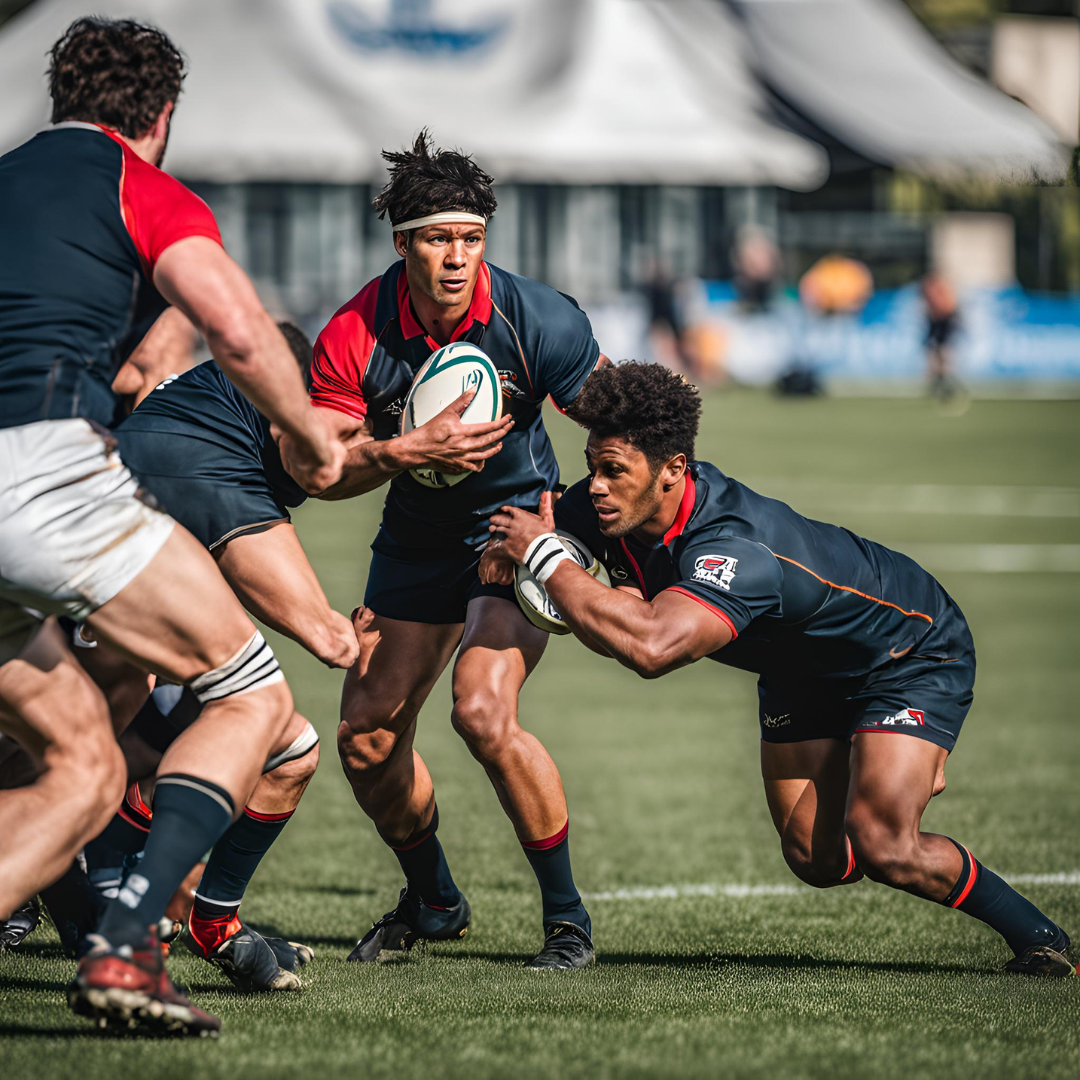
The Scrumhalf in Rugby Union: The Engine of the Team
The scrumhalf is one of the most pivotal positions in rugby union. Often referred to as the team’s “general on the field,” the scrumhalf directs play, controls the tempo, and links the forwards with the backs. This role requires quick decision-making, agility, and excellent communication skills. Whether you’re new to rugby or looking to enhance your knowledge of the sport, understanding the responsibilities, skills, and tactical influence of a scrumhalf is crucial to appreciating how a team functions on the field.
Check out our Rugby 101 post here to start with the entire game.
The Role of the Scrumhalf
Wearing the number 9 jersey, the scrumhalf’s primary responsibility is to distribute the ball from the breakdowns (rucks, mauls, and scrums) to the rest of the team. Positioned at the heart of the action, the scrumhalf has more touches of the ball than any other player during a match. Their job is to keep the game flowing, making them integral to both the offensive and defensive strategies.
Here’s a breakdown of the key responsibilities of a scrumhalf:
Ball Distribution
- Passing: The scrumhalf is primarily a passer, receiving the ball from the forwards and passing it out to the backs. Their passes must be precise and quick, allowing the team to maintain momentum. This requires a range of passing techniques, from flat, fast passes to long, looping ones, depending on the tactical situation.
- Decision Making: The scrumhalf decides where and how to distribute the ball. Should they pass it to the fly-half (No. 10) to create space for the backline? Should they keep it in the forwards for a few more phases? Or is a box kick the best option? Their decisions can dictate the flow and success of the game.
Link Between Forwards and Backs
- The scrumhalf serves as the key link between the forwards, who handle the physicality of the game, and the backs, who typically focus on speed and creativity. By controlling the ball’s release from the breakdowns, they determine when to play expansively with the backs or keep things tight with the forwards.
Kicking Game
- While the fly-half often takes on the role of primary kicker, the scrumhalf is also expected to contribute. The most common kick from a scrumhalf is the box kick, a tactical kick executed from behind a ruck or scrum. It is a high, short-range kick designed to either relieve pressure or provide an opportunity for the chasing team to contest for possession. Mastering the box kick is crucial for a scrumhalf, as it can be an effective tool for gaining territory or resetting play.
Defense
- Despite their typically smaller stature compared to forwards, scrumhalves play a critical role in defense. Positioned just behind the defensive line, they are often the first line of defense when a breakdown occurs, organizing the team and making critical tackles around the fringes of rucks and scrums.
- Scrumhalves also need to be excellent communicators, constantly directing teammates and ensuring the defensive line is well-organized.
Supporting Play
- Scrumhalves must always be in position to receive the ball, which means they are constantly in motion, supporting ball carriers, and anticipating the next phase of play. Their ability to quickly assess and react to the unfolding game is essential, as they often take on the role of decision-maker in fast-moving situations.
Key Skills of an Effective Scrumhalf
To excel in this position, a scrumhalf must possess a unique blend of physical and mental attributes. Here are some of the key skills and qualities that define a successful scrumhalf:
Quick Reflexes and Agility
- Scrumhalves need to have lightning-fast reflexes to get to the breakdowns quickly and make split-second decisions. Their agility allows them to weave through defenders, move swiftly between rucks, and evade tackles when necessary.
Communication and Leadership
- A scrumhalf is often the loudest voice on the field, directing traffic and ensuring the team stays organized. They must be able to communicate effectively with both forwards and backs, often playing the role of an on-field coach.
Pass Accuracy and Range
- A scrumhalf must have impeccable passing skills. Whether it’s a short pass to a forward charging into contact or a long pass to a winger in space, the ability to pass quickly and accurately is fundamental.
Tactical Awareness
- Scrumhalves must have a deep understanding of the game and be able to read the opposition’s defense. This enables them to choose the right option—whether to pass, kick, or run the ball. A tactically astute scrumhalf can manipulate defenses and create opportunities for their team.
Physical Fitness
- Rugby union is a physically demanding sport, and the scrumhalf, due to their constant involvement, needs to have high levels of stamina and endurance. They are always on the move, following the ball, directing play, and defending, which requires excellent fitness levels.
Famous Scrumhalves in Rugby History
The impact of a world-class scrumhalf can be game-changing. Over the years, several scrumhalves have left an indelible mark on the sport:
- Gareth Edwards (Wales): Often regarded as one of the greatest players in rugby history, Edwards’ speed, skill, and tactical awareness helped Wales dominate the international scene in the 1970s.
- George Gregan (Australia): Known for his leadership and tenacity, Gregan was a cornerstone of the Australian team, amassing 139 caps over his career.
- Faf de Klerk (South Africa): A modern-day scrumhalf, de Klerk is known for his fierce defense, tactical kicking, and his role in South Africa’s 2019 Rugby World Cup win.
The scrumhalf in rugby union is a multifaceted player who controls the tempo, distributes the ball, and provides leadership on the field. It is one of the most demanding positions in rugby, requiring a combination of skill, intelligence, and athleticism. Whether it’s making quick passes, organizing the defense, or executing a perfectly timed box kick, the scrumhalf is the engine that drives the team’s performance. Understanding the crucial role of the scrumhalf gives fans a deeper appreciation of the strategies and intricacies that make rugby union such a captivating and complex sport.

Leave a Reply