
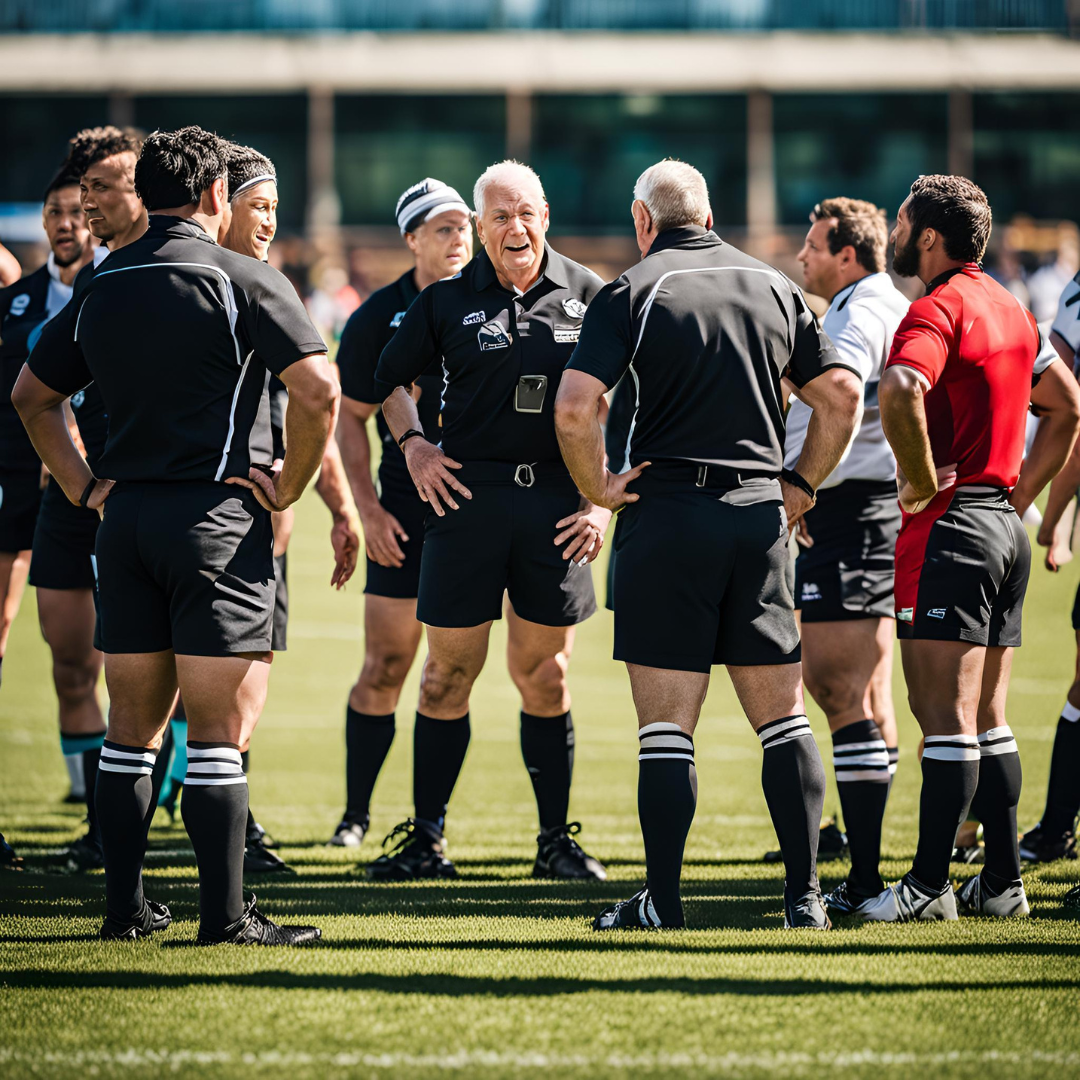
The Challenges of Officiating Rugby: Insights from North American Referees
Refereeing rugby in North America presents a unique set of challenges, from the rapidly growing player base to the cultural nuances of a sport still finding its foothold in the region. While the core principles of officiating remain consistent worldwide, referees working in the U.S. and Canada must navigate a landscape shaped by diverse levels of understanding, varying levels of competition, and sometimes vast geographic distances. Through interviews and insights from experienced rugby referees, we explore what it takes to officiate in North America and the particular demands the job entails.
Diverse Levels of Play and Experience:
One of the biggest challenges for North American rugby referees is officiating across a broad spectrum of competition levels. In regions where rugby is still growing, the gap in skill levels between teams or even players within the same team can be significant. Referees may find themselves officiating youth matches with beginners one day and high-level club or collegiate games the next.
This requires referees to be adaptable, shifting between acting as instructors during youth games to being strict enforcers of the law during elite-level matches. The ability to read the game and apply appropriate levels of tolerance for minor infractions becomes key to maintaining fairness and flow, especially at the grassroots level.
Communication and Educating Players:
In North America, rugby’s relative newness means that many players, particularly at the youth and amateur levels, are still learning the finer points of the game. Referees often find themselves playing dual roles—both enforcing the rules and acting as educators during the match. This educational aspect of refereeing is critical to the development of the sport, as the decisions referees make on the field can significantly impact players’ understanding of the game.
Referees need strong communication skills to explain their decisions clearly and calmly, ensuring that players understand why they were penalized and how to avoid making the same mistake again. This educational approach helps players improve and, over time, elevates the overall quality of rugby in North America.
Physical and Mental Fitness:
Like the players, rugby referees need to maintain a high level of physical fitness. Rugby is an intense, fast-paced game, and referees must be able to keep up with the action to make accurate calls. The ability to be in the right position at the right time is critical, especially in a sport where the ball can move rapidly from one end of the field to the other.
Beyond the physical demands, refereeing rugby also requires mental resilience. The pressure to make split-second decisions, often under scrutiny from players, coaches, and fans, can be intense. Referees must stay calm under pressure, manage emotional reactions from players, and keep control of the game’s flow while maintaining impartiality.
Managing Physicality and Safety:
Rugby is a contact sport, and managing the physicality of the game is a critical responsibility for referees. One of the most important aspects of officiating is ensuring player safety, particularly in areas like scrums, tackles, and rucks, where injuries can occur if the rules aren’t followed strictly.
This balance between keeping the game flowing and ensuring player safety can be delicate. Referees must be decisive, especially when it comes to issuing penalties for dangerous play, such as high tackles or improper scrum engagement. In North America, where many athletes are still learning to adjust their technique to avoid penalties, the referee’s role in reinforcing safety standards becomes even more critical.
Adapting to Different Styles of Play:
North American rugby is still heavily influenced by the diverse backgrounds of its players. With athletes coming from various sports—American football, soccer, wrestling, track and field—the style of play can vary significantly from region to region or even team to team. Some teams might emphasize speed and wide-open play, while others focus on physicality and close-quarter battles.
This presents another challenge for referees, who must quickly adapt to the style of the game and apply the laws accordingly. “You have to read the game as it unfolds,” says Evans. “Some teams will push the physical limits, while others try to play a fast, expansive style. You need to adjust how you officiate based on the way the game is being played.”
Recognizing these different styles and knowing how to control the tempo of the game without stifling creativity is one of the more nuanced aspects of rugby officiating in North America.
Travel and Geography:
Unlike countries with dense rugby infrastructures, like England, New Zealand, or South Africa, referees in North America often face the challenge of long travel distances. Rugby competitions are spread across vast regions, particularly in the U.S., where referees might have to travel hours, sometimes crossing state lines, to officiate a match. This geographic spread means referees may work in isolation, without the benefit of nearby mentorship or a community of fellow referees.
This distance also means that referee training and development programs can be harder to access in some parts of North America, making it essential for referees to seek out continued education, often through online courses or occasional in-person clinics.
Work Life Balance:
Balancing work and rugby officiating presents a unique challenge for referees in North America. Many juggle full-time careers or studies alongside their responsibilities on the pitch, including travel, match preparation, and ongoing professional development. Despite the demands, referees often cite their passion for rugby and commitment to fair play as driving forces. Organizations like USA Rugby and Rugby Canada have worked to provide resources, mentorship programs, and flexible opportunities to help officials maintain a healthy work-life balance while contributing to the growth of the sport across the continent.
Technological Integration and Resources:
Referees in professional rugby competitions around the world have access to technology like Television Match Officials (TMOs) and other tools to help make calls on critical moments. However, many North American referees, particularly at the amateur and youth levels, do not have access to this technology, forcing them to rely entirely on their own judgment in real-time. The absence of TMO technology increases the pressure on referees, particularly in high-stakes games.
Despite these limitations, North American rugby referees are finding ways to make use of available resources, such as referee training apps, video analysis, and online communities where referees can discuss calls and share insights to improve their craft.
The Big Guy’s Final Thoughts
Refereeing rugby in North America requires a unique combination of adaptability, resilience, and a passion for the sport. With the game still growing, referees often play a dual role as both officials and educators, helping shape the rugby landscape by instilling a deeper understanding of the game among players and coaches. Despite challenges like varying levels of play, long travel distances, and limited technological support, referees are crucial to the continued growth and development of rugby in the region. Their ability to manage the physicality, maintain safety, and adapt to diverse styles of play ensures that the sport continues to thrive, providing North American rugby players with fair and well-officiated matches across all levels.

Leave a Reply