
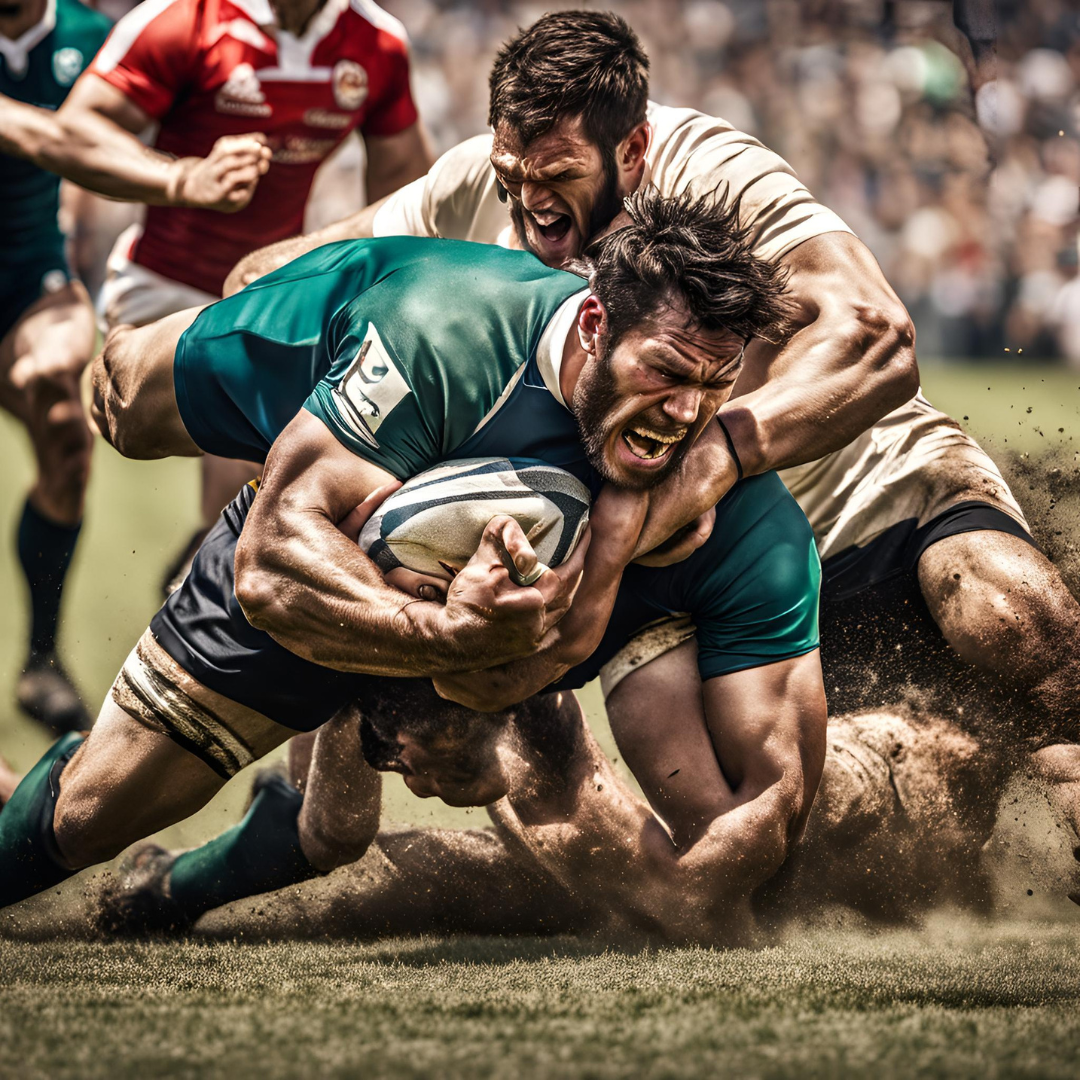
Tackling in Rugby: The Art, Science, and Strategy Behind the Defensive Backbone
Tackling is at the heart of rugby, embodying the physicality and skill that make the game so thrilling. It’s more than just a contest of strength; tackling is an art form, requiring precision, technique, and strategic thinking. A well-executed tackle not only stops the opposition’s progress but can also create turnover opportunities, disrupt attacking momentum, and swing the game in your favor.
In this blog, we’ll delve into the fundamentals of tackling, explore the various types of tackles used in rugby, and analyze the strategic considerations that make tackling a crucial part of the game.
The Fundamentals of Tackling
Tackling is the primary defensive tool in rugby, allowing players to legally stop an opponent carrying the ball. The aim is to bring the ball carrier to the ground, ensuring they release the ball while adhering to the laws of the game.
1.1 Key Components of a Tackle
- Positioning: A tackler must align themselves correctly to close down the ball carrier’s space. Good positioning reduces the risk of missed tackles and minimizes gaps in the defensive line.
- Body Height: Staying low is critical. A lower body position gives the tackler better leverage and reduces the risk of slipping off the tackle.
- Grip and Drive: Wrapping arms securely around the ball carrier and driving with the legs ensures a solid tackle and prevents the opponent from gaining extra meters.
- Safety: Proper technique protects both the tackler and the ball carrier. Tackling above the shoulder line is illegal and dangerous, resulting in penalties or cards.
1.2 The Role of the Tackle in Rugby Laws
Rugby laws are designed to ensure player safety and maintain the game’s flow. Key points include:
- Release the Ball: The tackled player must release the ball immediately upon hitting the ground.
- Release the Tackler: The tackler must release the tackled player after bringing them down, allowing fair competition for the ball.
- Stay Onside: Players must re-enter the contest for the ball from an onside position, usually behind the tackled player.
Types of Tackles in Rugby
Different situations on the field require specific types of tackles. Understanding and mastering these techniques is essential for any player.
2.1 Front-On Tackle
The front-on tackle is one of the most common techniques used to stop a ball carrier head-on. This tackle involves getting low, making solid contact with the shoulders, and wrapping the arms around the opponent’s lower body.
- Best Used For: Halting forward momentum and driving the ball carrier backward.
- Strategic Advantage: A dominant front-on tackle can force the opposition to retreat or lose ground.
2.2 Side Tackle
When approaching a ball carrier from an angle, the side tackle is employed. This involves targeting the opponent’s hips or thighs, ensuring the tackler maintains balance and control.
- Best Used For: Situations where the ball carrier is running laterally or trying to break through the defensive line.
- Strategic Advantage: Redirects the ball carrier toward support defenders or the sideline.
2.3 Smother Tackle
The smother tackle aims to wrap up the ball carrier completely, including the ball. This technique is designed to prevent the opponent from offloading or passing.
- Best Used For: When the opposition’s key playmaker is attacking, or when an offload is likely.
- Strategic Advantage: Can force a maul or turnover by holding up the ball.
2.4 Low Chop Tackle
A chop tackle involves targeting the ball carrier’s legs, bringing them down quickly. This is a highly effective one-on-one tackling technique.
- Best Used For: Stopping larger, stronger ball carriers.
- Strategic Advantage: Brings the opponent to ground efficiently, allowing other defenders to contest the breakdown.
2.5 Ankle Tap
An ankle tap is a last-ditch effort to stop a ball carrier who is out of reach. The tackler dives and slaps at the ball carrier’s ankles, causing them to stumble.
- Best Used For: When the ball carrier has broken through the defensive line.
- Strategic Advantage: Buys time for support defenders to regroup.
The Strategic Role of Tackling
Tackling isn’t just about stopping the ball carrier—it’s about influencing the game strategically. Effective tackling can disrupt the opposition’s rhythm, gain territorial advantage, and force turnovers.
3.1 Defensive Line Integrity
A cohesive defensive line is critical to minimizing gaps and opportunities for the opposition. Tackles must be made decisively to maintain the line’s structure.
- Communication: Defenders must communicate constantly to ensure everyone knows their assignments and gaps are covered.
- Line Speed: Advancing quickly as a unit puts pressure on the ball carrier and reduces their time to make decisions.
3.2 Forcing Errors
Aggressive and well-timed tackles can lead to handling errors, knock-ons, or forced passes. These errors disrupt the opposition’s momentum and create attacking opportunities.
3.3 Dominant Tackles
A dominant tackle occurs when the ball carrier is driven backward, often leaving them isolated. This type of tackle can:
- Push the opposition onto the back foot.
- Create opportunities for turnovers by disrupting support players.
3.4 Targeting Key Players
Strategic tackling involves focusing on key opposition players, such as playmakers or strong runners. Neutralizing these threats can disrupt the team’s attacking structure.
Tackling at the Breakdown
The breakdown is a critical area of contest following a tackle. Teams that dominate this phase can control possession and tempo.
4.1 Jackaling
A jackal is a player who contests for the ball immediately after the tackle. To jackal effectively:
- Arrive quickly and position the body low over the ball.
- Maintain a strong, balanced stance to withstand counter-pressure.
4.2 Counter-Rucking
If jackaling isn’t an option, defenders may choose to counter-ruck. This involves driving over the ball to clear out opposition players and win possession.
4.3 Tackle Assist
Defenders can assist the tackler by arriving quickly and securing the ball before the opposition’s support players arrive.
Training for Tackling Excellence
Developing tackling skills requires consistent practice and focus on technique, strength, and decision-making. Training methods include:
- Tackle Bags and Shields: To improve tackling form and confidence without the risk of injury.
- 1-on-1 Tackling Drills: To simulate match situations and hone accuracy.
- Game Scenarios: Practicing tackles under pressure in realistic scenarios.
- Strength and Conditioning: Building core strength, leg drive, and agility to enhance tackling performance.
Safety and Tackling
Rugby prioritizes player safety, and tackling is a key area where proper technique minimizes injury risks. Coaching should emphasize:
- Tackling low and avoiding contact with the head or neck.
- Using the shoulder and wrapping arms securely.
- Avoiding reckless or high-speed tackles that could result in penalties or cards.
Conclusion: Tackling as a Game-Changer
Tackling in rugby is much more than a defensive necessity—it’s a strategic weapon that can turn the tide of a match. From stopping an opponent in their tracks to creating turnovers and disrupting their attack, a well-executed tackle can shift momentum and energize a team.
Mastering the art of tackling requires a combination of skill, strength, and tactical awareness. Whether it’s a bone-crunching front-on hit, a precision chop tackle, or a clever smother to prevent an offload, tackling is where individual brilliance meets team strategy. By understanding its nuances and practicing with purpose, players can elevate their game and make tackling a defining part of their rugby identity.

Leave a Reply