
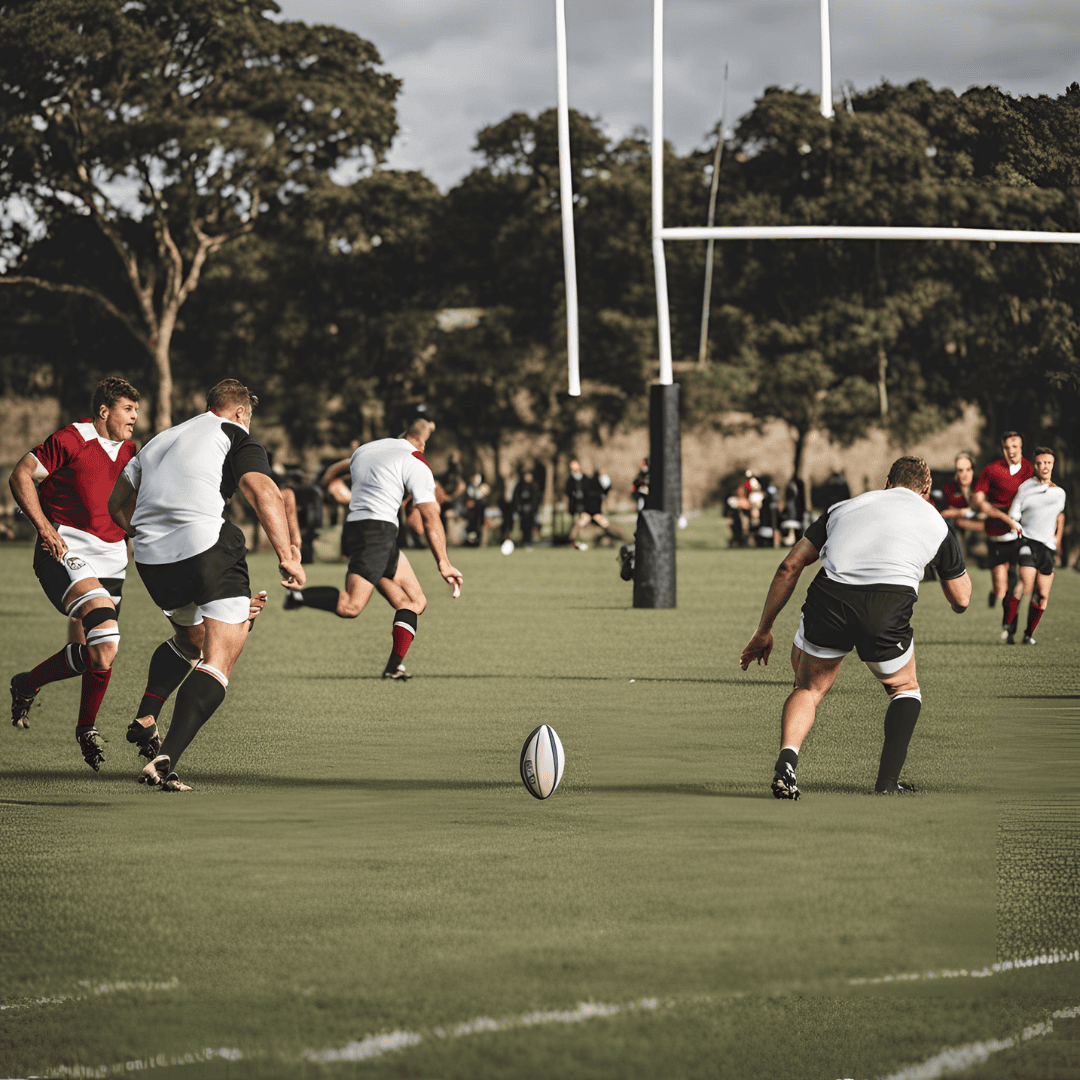
The Art and Science of Kicking in Rugby
Kicking in rugby is one of the most essential and versatile skills in the game. It serves as a means to gain territory, score points, and manipulate field position. A well-executed kick can relieve pressure, launch counter-attacks, or set up tries, while a poorly timed or inaccurate kick can hand the advantage to the opposition.
Whether it’s a towering up-and-under, a precision grubber, or a match-winning conversion, kicking plays a pivotal role in shaping the flow and outcome of rugby matches. In this blog, we’ll dive into the different types of kicks, the technical and tactical nuances of kicking, and the key moments when a good kick can make all the difference.
Check out our Rugby 101 post here to start with the entire game.
Types of Kicks in Rugby
There are several types of kicks in rugby, each serving a specific purpose. Understanding the nuances of each kick allows players to deploy them effectively, making kicking a multifaceted weapon in the sport.
The Punt: The most common kick in rugby is the punt, used primarily for gaining territory. Players use the punt to drive the ball deep into opposition territory, often after a team has won a turnover or has been awarded a free kick. The goal is to clear the ball downfield, allowing the attacking team to advance up the pitch while forcing the opposition back.
Key to a successful punt is accuracy and distance. A perfectly weighted punt should land just inside the touchline, putting the opposing team under pressure. A skilled kicker will look to find space or exploit defensive weaknesses by targeting areas where the opposition is unorganized or where the fullback or winger might be out of position.
The Box Kick: This kick is generally executed by the scrum-half, often in situations when the team is under pressure or near their own try line. A box kick is a high, short kick over the ruck designed to allow the kicker’s team to contest for the ball as it descends. The idea is to kick high enough to give teammates time to chase and apply pressure on the receiving player.
Box kicks are used for tactical reasons when teams want to avoid kicking directly to the opposition backline. Timing and precision are critical to ensure the ball is contestable and doesn’t give the opposition an easy counter-attack.
The Drop Kick: A drop kick involves dropping the ball and kicking it after it bounces. This type of kick is used for restarts, such as after a try has been scored, or for a drop goal attempt. A drop goal is a rare but significant way to score points in rugby, as it can be taken from open play and yields three points if successful.
Drop goals are often used in tight games where every point counts, especially in situations where kicking for the posts from a penalty might not be an option. Legendary players like Jonny Wilkinson have cemented their place in rugby history with game-winning drop goals, demonstrating the immense pressure and skill required to execute them.
The Grubber Kick: The grubber kick is a low, bouncing kick that is difficult for defenders to field cleanly. The ball is kicked along the ground, causing it to bounce unpredictably, often forcing defenders to scramble to regain control. This kick is most commonly used as an attacking weapon to exploit gaps in the defense, particularly when wingers or fullbacks are caught out of position.
Grubber kicks are used in broken play to create opportunities for attackers to regather the ball or force the opposition into errors. The kicker must gauge the power and trajectory carefully to ensure the ball doesn’t roll over the dead-ball line, wasting a potential scoring chance.
The Chip Kick: The chip kick is a short, lofted kick designed to go over the heads of defenders but land in space where the attacking team can retrieve it. Unlike the grubber, which stays low to the ground, the chip kick arcs into the air, clearing defensive lines while allowing the attacking team to run onto the ball.
Chip kicks are often used when the defensive line is pressing hard and leaves space behind. It’s a high-risk, high-reward tactic, as a well-placed chip can result in a try, but a poorly executed one can gift the ball back to the opposition.
Place Kicking: Perhaps the most high-pressure kicks in rugby are the place kicks – the kicks at goal for penalties and conversions. A penalty kick gives the team an opportunity to score three points from a penalty, while a conversion, taken after a try, offers a chance to add two more points.
These kicks require immense accuracy and mental toughness, as they can often be the difference between winning and losing. Place kickers must deal with the pressure of the moment, wind conditions, and the exact positioning of the ball to deliver consistent results.
The Tactical Role of Kicking
Kicking in rugby is much more than just clearing the ball; it’s a strategic tool that can shift the momentum of the game. Here are some of the ways kicking plays into the broader tactical landscape of a match:
Gaining Territory: One of the primary uses of kicking is to gain territory. By kicking deep into opposition territory, teams can relieve defensive pressure or force the opposition to play from their own half. In a territorial battle, the kicking game becomes a chess match, with both teams looking to pin the other back and force mistakes.
Applying Pressure: High kicks, like the box kick or up-and-under, can be used to apply pressure on the opposition’s back three (fullbacks and wingers). These players need to be adept under the high ball, and even the smallest mistake can create opportunities for the attacking team to regain possession and launch an attack.
Counter-Attacking: A poorly placed kick can open up counter-attacking opportunities for the receiving team. Fullbacks and wingers, in particular, thrive on counter-attacks, turning defense into attack by quickly launching a run from deep after fielding a kick.
Kicking battles, where teams exchange long kicks, often result in the defensive line becoming disorganized, providing opportunities for players like Beauden Barrett or Stuart Hogg to exploit gaps and launch devastating counter-attacks.
Managing the Game: Experienced teams use kicking to control the pace and rhythm of the game. When leading, teams will often kick for touch or use box kicks to slow the game down and minimize risk. Conversely, in situations where they need quick points, teams may resort to riskier, attacking kicks, such as chips and grubbers, to break down stubborn defenses.
Mastering the Art of Kicking
Kicking in rugby requires technical proficiency, tactical awareness, and the mental strength to deliver in high-pressure situations. The best kickers, like Dan Carter, Johnny Sexton, or Owen Farrell, have spent countless hours honing their technique to the point where they can kick with precision, distance, and accuracy under any condition.
Key components of successful kicking include:
- Body Positioning: Ensuring proper alignment and balance throughout the kicking motion is crucial for accuracy and power.
- Follow-Through: The follow-through is often just as important as the strike itself, as it dictates the trajectory and distance of the ball.
- Mental Toughness: Pressure situations in rugby, like kicking to win the game, test a player’s mental resilience. Kicking is not just physical; it’s psychological, as players must remain calm and focused despite the high stakes.
Kicking is an integral part of rugby that requires a blend of physical skill, technical prowess, and tactical insight. Whether it’s to gain territory, launch attacks, or score vital points, kicking can make or break a team’s performance. As rugby evolves, the role of kicking continues to grow, adding layers of complexity and excitement to the sport. For players and teams alike, mastering the art of kicking is essential for success at any level of the game.

Leave a Reply