

Understanding the Referee Signals: Recognizing and Reacting to Common Hand Signals During a Rugby Match
In rugby, the referee’s hand signals are an essential part of communication on the field. These signals convey critical information about the game’s flow, including penalties, infringements, and scoring. For players, coaches, and spectators, understanding these signals can enhance the experience and ensure proper reactions to on-field decisions.
This blog breaks down the most common hand signals in rugby, their meanings, and how players should respond to maintain discipline and capitalize on opportunities.
The Importance of Referee Signals
Rugby is a fast-paced game where constant communication is necessary. The referee’s signals serve multiple purposes:
- Clarity: Signals provide a visual cue to accompany verbal decisions, ensuring all players understand the ruling.
- Consistency: Standardized gestures allow players from different regions or backgrounds to interpret decisions accurately.
- Flow of the Game: Quick and clear signaling helps maintain the game’s tempo.
- Spectator Engagement: Signals inform fans about the game’s context, making it easier to follow.
Common Referee Hand Signals
1. Advantage

- Signal: The referee extends one arm straight forward in the direction of the attacking team.
- Meaning: Play continues despite a minor infringement by the opposing team, as the non-offending team may gain an advantage.
- Player Reaction:
- Keep playing aggressively while remaining aware that the referee may call the play back if the advantage does not materialize.
- Avoid committing further infringements that could negate the advantage.
2. Knock-On

- Signal: The referee extends one arm forward and then moves it backward in a scooping motion.
- Meaning: A player has knocked the ball forward with their hand or arm.
- Player Reaction:
- Prepare for the resulting scrum, ensuring your team is ready to contest possession.
- Avoid disputing the call and focus on the next phase of play.
3. Forward Pass

- Signal: The referee makes a pushing motion with both hands in front of their body.
- Meaning: A pass has traveled forward from the ball carrier’s hands, which is illegal.
- Player Reaction:
- Quickly transition to a defensive mindset, as the opposing team will likely be awarded a scrum.
- Communicate with teammates to maintain organization.
4. Offside

- Signal: The referee raises one arm horizontally and points towards the infringing player or team.
- Meaning: A player is in an offside position and has interfered with play.
- Player Reaction:
- Retreat immediately to an onside position to avoid additional penalties.
- Be aware of the referee’s positioning and instructions to prevent repeat offenses.
5. High Tackle

- Signal: The referee places one hand at neck height and moves it in a horizontal chopping motion.
- Meaning: A tackle was made above the shoulder line, which is dangerous and illegal.
- Player Reaction:
- Avoid arguing with the referee and focus on improving tackle technique.
- If the penalty is against the opposing team, prepare for a potential kick to touch or attempt at goal.
6. Scrum Infringement
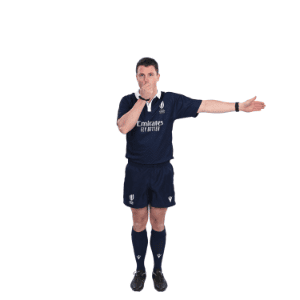
- Signal: The referee extends one arm forward toward the team awarded the penalty.
- Meaning: A scrum violation, such as collapsing or early engagement, has occurred.
- Player Reaction:
- Adjust technique and communicate with the pack to ensure proper binding and timing.
- Listen carefully to the referee’s instructions to avoid repeat infringements.
7. Penalty

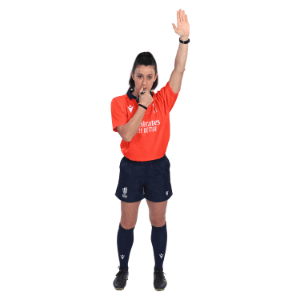
- Signal: The referee extends one arm straight upward and blows the whistle.
- Meaning: A serious infringement has occurred, resulting in a penalty for the non-offending team.
- Player Reaction:
- The captain should quickly communicate with teammates to decide on the next action (e.g., kick for touch, take a quick tap, or attempt a penalty goal).
- Avoid dissent or delaying tactics, as these can result in further penalties.
8. Free Kick

- Signal: The referee raises one arm horizontally and bends it at the elbow, tapping the opposite shoulder.
- Meaning: A minor infringement has resulted in a free kick for the non-offending team.
- Player Reaction:
- Take advantage of the opportunity to launch a quick attack if the defense is unprepared.
- Organize support players to capitalize on open space.
9. Try Awarded
- Signal: The referee points both arms horizontally toward the ground.
- Meaning: A try has been scored.
- Player Reaction:
- Celebrate appropriately while preparing for the conversion kick.
- Ensure all players reset quickly for the restart.
10. No Try

- Signal: The referee crosses both arms in front of their chest.
- Meaning: A try has been disallowed due to an infringement or other reason.
- Player Reaction:
- Refocus immediately on the next phase of play.
- Avoid protests and instead communicate with the referee to understand the decision.
11. Yellow Card
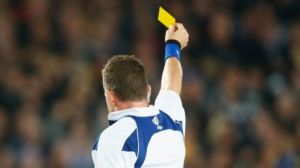
- Signal: The referee holds a yellow card aloft.
- Meaning: A player has committed an offense warranting a temporary suspension (sin-bin) for 10 minutes.
- Player Reaction:
- If carded, leave the field promptly and prepare to return after the sin-bin period.
- Remaining players should adjust tactics to account for being a player down.
12. Red Card

- Signal: The referee holds a red card aloft.
- Meaning: A player has been sent off for a serious offense and cannot return to the game.
- Player Reaction:
- Remaining players should regroup and adjust strategies to compensate for the loss.
- Avoid further infringements to prevent compounding the disadvantage.
Tips for Recognizing and Reacting to Signals
- Stay Alert
- Always keep an eye on the referee during play to ensure you don’t miss important signals.
- Communicate with Teammates
- Relay the referee’s decisions quickly and clearly to maintain team cohesion.
- Understand the Laws
- Familiarity with the laws of rugby will help players anticipate and interpret signals accurately.
- Practice Awareness in Training
- Incorporate referee signaling into training drills to simulate game situations and improve reaction times.
- Respect the Referee
- Accept decisions without dissent, as arguing can lead to further penalties.
Conclusion
Understanding the referee’s hand signals is crucial for players, coaches, and spectators alike. By recognizing these signals and responding appropriately, teams can maintain discipline, capitalize on opportunities, and avoid unnecessary penalties. For fans, knowing the signals enhances the viewing experience, providing deeper insight into the game’s nuances. Whether you’re on the field or watching from the stands, mastering the referee’s signals is an essential part of rugby literacy.

Leave a Reply