
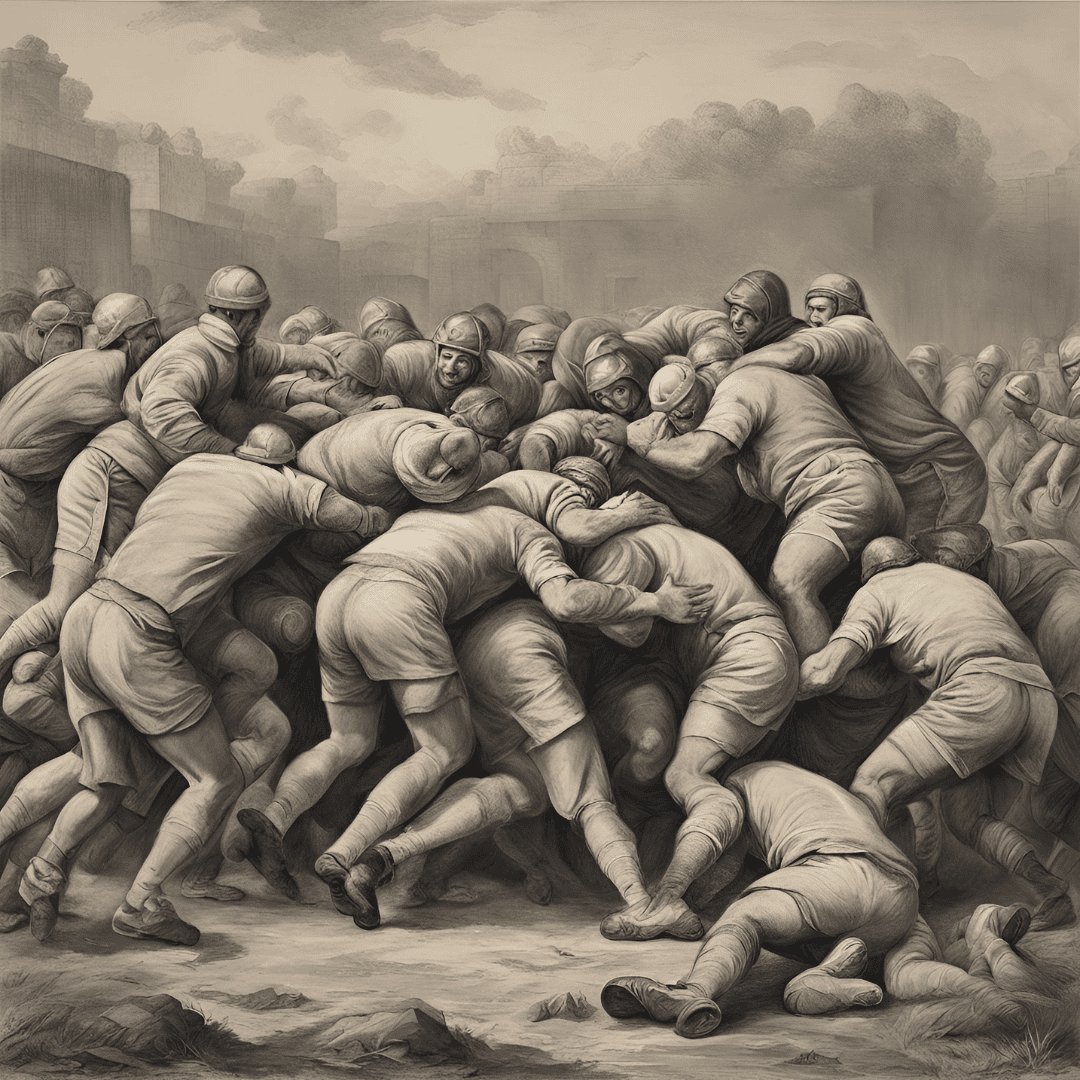
Understanding the Scrum: A Deep Dive into Rugby’s Most Iconic Set Piece
Rugby is a sport rich in tradition and complexity, with many unique elements that set it apart from other games. Among these, the scrum is perhaps the most iconic and misunderstood set piece. To the uninitiated, it might appear as a chaotic collision of massive athletes pushing against each other. However, the scrum is a highly technical and strategic aspect of rugby that requires precision, coordination, and immense physical strength. This article delves into the intricacies of the rugby scrum, exploring its purpose, structure, and the skills required to execute it successfully. Check out our Rugby 101 post here to start with the entire game.
The Purpose of the Scrum
The scrum is used to restart play after a minor infringement, such as a forward pass or a knock-on (when the ball is accidentally dropped forward). It involves eight players from each team, known as the “pack,” binding together in three rows and pushing against the opposing pack in an attempt to gain possession of the ball.
The primary objective of the scrum is to secure the ball, which is introduced into the scrum by the scrumhalf of the team awarded the scrum. The team that wins the ball aims to control it with their feet, work it to the back of the scrum, and then deliver it to the scrumhalf, who will pass it out to the backs or initiate another phase of play.
The Structure of the Scrum
The scrum is a carefully coordinated effort involving all eight forwards from each team. The players are arranged in three rows:
The Front Row:
The front row consists of three players: the two props (loosehead and tighthead) and the hooker. The props’ primary role is to support the hooker and exert pressure on the opposition’s front row. The hooker, positioned between the props, is responsible for striking the ball with their feet to win possession.
The Second Row:
Behind the front row are the two locks, also known as second-row forwards. These players are often the tallest and strongest on the team. Their role is to provide power and stability to the scrum by binding tightly to the front row and driving forward with their legs.
The Back Row:
The back row consists of two flankers and the number eight. The flankers are positioned on either side of the scrum, while the number eight is at the back. The back row players are crucial in maintaining the balance and momentum of the scrum. They also have the added responsibility of breaking away quickly to support the next phase of play once the ball is won.
The Process of Setting Up a Scrum
Setting up a scrum is a meticulous process governed by strict rules to ensure fairness and safety. Here is how it typically unfolds:
Engagement:
The referee controls the engagement process by issuing a series of commands: “Crouch,” “Bind,” and “Set.” On “Crouch,” the front rows bend at the waist, ready to engage. On “Bind,” the players grab hold of their opponents’ jerseys, ensuring a stable and secure bind. Finally, on “Set,” the two packs engage, with each team attempting to gain an advantage by driving forward.
The Feed:
Once the scrum is stable, the scrumhalf feeds the ball into the tunnel formed by the front rows. This must be done straight, although there is often some leeway allowed by referees.
The Hook:
The hooker attempts to strike the ball back towards their side using their foot. The team that wins the ball controls it with their feet, moving it towards the number eight at the back of the scrum.
The Drive:
As the ball is being hooked, both packs push with all their might, trying to drive the other team backwards. A well-coordinated drive can win the ball or even force the opposition off the ball entirely, resulting in a turnover.
The Exit:
Once the ball reaches the number eight, the scrumhalf retrieves it and the team transitions into the next phase of play, whether that’s a pass to the backs, a pick-and-go by the number eight, or another strategic move.
The Skills Required for a Successful Scrum
Executing a successful scrum requires more than just raw strength. It demands a combination of technique, timing, and teamwork. Each player in the scrum must know their role and be able to execute it under pressure. Here are some key skills:
Strength and Power:
The scrum is a physical battle, and players need significant strength to withstand and exert the forces involved. This is particularly true for the front row and locks, who bear the brunt of the opposition’s push.
Technique:
Proper body positioning and binding are crucial. Players must maintain a low, stable position with their backs flat and hips low to maximize power and minimize the risk of collapse, which can be dangerous.
Timing and Coordination:
The entire scrum must work as a unit, with each player pushing in sync with their teammates. A mistimed push or poor coordination can lead to the scrum being disrupted or penalized.
Communication:
Constant communication among the forwards is essential to adapt to the opposition’s tactics and adjust the scrum’s formation or strategy as needed.
The Importance of the Scrum in Rugby
The scrum is more than just a way to restart play; it is a test of a team’s physical and mental resilience. A dominant scrum can demoralize the opposition, provide a solid platform for attack, and even lead to penalties or free kicks. Conversely, a struggling scrum can put a team on the back foot, leading to lost possession and defensive pressure.
The scrum remains one of rugby’s most iconic and essential elements. Its complexity and physicality make it a true spectacle within the game, showcasing the power, technique, and strategy that define rugby. Understanding the scrum is key to appreciating the intricacies of the sport and the immense skill involved in mastering this set piece.

Leave a Reply