
The Role of Locks in Rugby: The Powerhouses of the Pack
Locks, also known as second-row forwards, are among the most physically imposing players on a rugby team. Wearing the numbers 4 and 5, locks are central to a team’s forward pack, providing strength, height, and power in both the set pieces and open play. While their primary responsibilities lie in dominating the lineouts and scrums, locks are also expected to contribute significantly as ball carriers, tacklers, and ruck enforcers. This blog explores the critical role that locks play in rugby, the skills required to succeed in this position, and their evolving importance in the modern game.
Check out our Rugby 101 post here to start with the entire game.
The Basics: Who Are the Locks?
Locks are usually the tallest players on the field, standing around 6’5″ (195 cm) or taller. They are key figures in the engine room of the scrum and lineout, and their primary role is to provide physicality, height, and coordination. In the scrum, locks bind behind the props and hooker, driving the team forward and generating the force needed to overpower the opposition. In the lineout, locks are lifted to contest the ball, using their height and timing to secure possession.
Beyond these core responsibilities, modern locks have become highly versatile, contributing in various aspects of play, including ball carrying, breakdown work, and defense. The position demands a combination of strength, agility, and tactical awareness, making locks integral to a team’s success.
The Scrum: The Locks as Power Generators
In the scrum, the primary role of the locks is to provide power and stability. Positioned in the second row behind the front row of props and the hooker, locks bind tightly to their teammates and drive with their legs to help propel the scrum forward. This is where the term “second row” comes from—locks form the second layer of the scrum behind the front row, ensuring that the team can exert maximum pressure on the opposition.
Power and Stability: The lock’s role in the scrum is often described as being the “engine” or “powerhouse” of the pack. Their job is to generate as much forward momentum as possible by driving their legs in unison with the rest of the pack. A successful scrum requires perfect timing and coordination, and locks must work closely with the front row to ensure that their team maintains stability and control. The success or failure of a scrum can depend heavily on the locks’ ability to provide a strong, sustained drive.
Binding and Technique: Good scrummaging technique is essential for locks. They must bind properly to the props in front of them, ensuring a tight connection that maximizes the transfer of power through the scrum. Proper binding also helps prevent the scrum from collapsing or becoming unstable, which can lead to penalties or the loss of possession. The lock’s body position, balance, and leg drive are key elements of effective scrummaging.
The Lineout: The Lock’s Aerial Domain
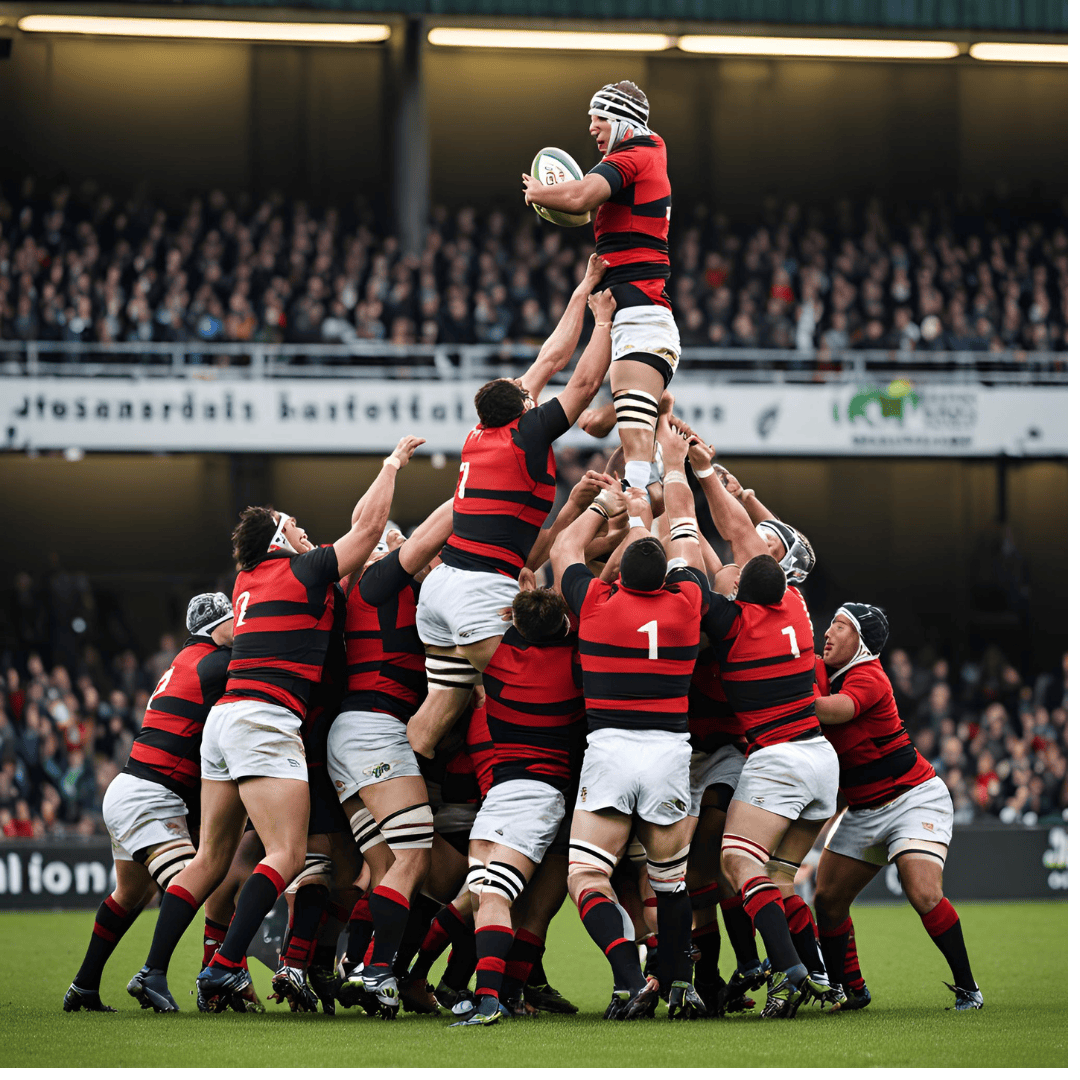
The lineout is where the lock truly shines. When the ball goes out of play, the hooker throws it back into the field in a lineout contest between the forwards of both teams. The lock, due to their height and jumping ability, is typically the player who is lifted by teammates to catch the ball or contest for possession.
Jumping and Lifting: Locks are the primary jumpers in the lineout. Their height gives them a natural advantage, but timing and coordination with their lifters are equally important. Locks need to be able to jump quickly and high, often reaching upwards of two meters or more, while their teammates lift them by the shorts and lower back. The accuracy of the hooker’s throw and the lock’s ability to judge the ball’s trajectory are crucial to winning the lineout.
Tactical Lineouts: Lineouts are not just about jumping and catching; they require strategy. Locks must work with the hooker to plan where the ball will be thrown and how to disrupt the opposition’s lineout. Locks may jump at the front, middle, or back of the lineout depending on the team’s strategy. A well-executed lineout can provide a platform for attacking moves, while a defensive lineout steal can shift momentum in the game.
Open Play: Ball Carrying and Tackling
Modern rugby locks are not just limited to set-piece play; they are increasingly involved in open play, contributing as ball carriers, defenders, and ruck enforcers. Their size and strength make them effective ball carriers, capable of making hard yards in contact situations and breaking through defensive lines.
Ball Carrying: Locks are often called upon to carry the ball into contact, particularly in tight areas around the ruck or maul. Their physicality allows them to gain ground, often drawing in multiple defenders and creating space for the backs. Locks like New Zealand’s Brodie Retallick and South Africa’s Eben Etzebeth are renowned for their ability to make powerful runs, often gaining valuable meters in key areas of the field.
Tackling and Defense: In defense, locks play a vital role in stopping opposition ball carriers. Their size allows them to make dominant tackles, while their mobility ensures they can cover large areas of the field. A good lock must be a reliable tackler, able to bring down opposing forwards and backs alike. Additionally, locks are often tasked with disrupting mauls and rucks, using their strength to slow down or turn over opposition ball.
Rucks and Breakdown Work
Locks are also heavily involved in the breakdown, the phase of play where the ball is contested after a tackle. They must be quick to get to the ruck and either secure the ball for their team or attempt to steal it from the opposition.
Securing Possession: After a tackle is made, locks are often the first players to arrive at the breakdown. Their job is to secure the ball for their team by rucking over it, protecting it from the opposition. Locks must be strong and technically proficient at clearing out opposition players who are trying to contest the ball.
Turnovers and Counter-Rucking: In defense, locks are key players in attempting to win turnovers at the breakdown. By counter-rucking—driving the opposition off the ball—or getting their hands on the ball to create a turnover, locks can disrupt the flow of the opposition’s attack and regain possession for their team.
Leadership and Influence
Locks are often seen as leaders within the team, not just because of their physical presence, but due to their involvement in almost every phase of play. Many international teams have locks who serve as captains, such as Alun Wyn Jones of Wales and Paul O’Connell of Ireland. Their central role in set pieces, combined with their visibility around the field, makes them natural leaders who can influence the game.
The Backbone of the Pack
Locks are the backbone of the forward pack, combining height, strength, and power to dominate in both the scrum and lineout. Their role has evolved over the years to include a significant contribution in open play, making them some of the most versatile and influential players on the field. Whether it’s driving the scrum forward, contesting lineouts, or carrying the ball into contact, locks are indispensable to any successful rugby team. Their physicality, athleticism, and tactical awareness make them true powerhouses of the game.

Leave a Reply