
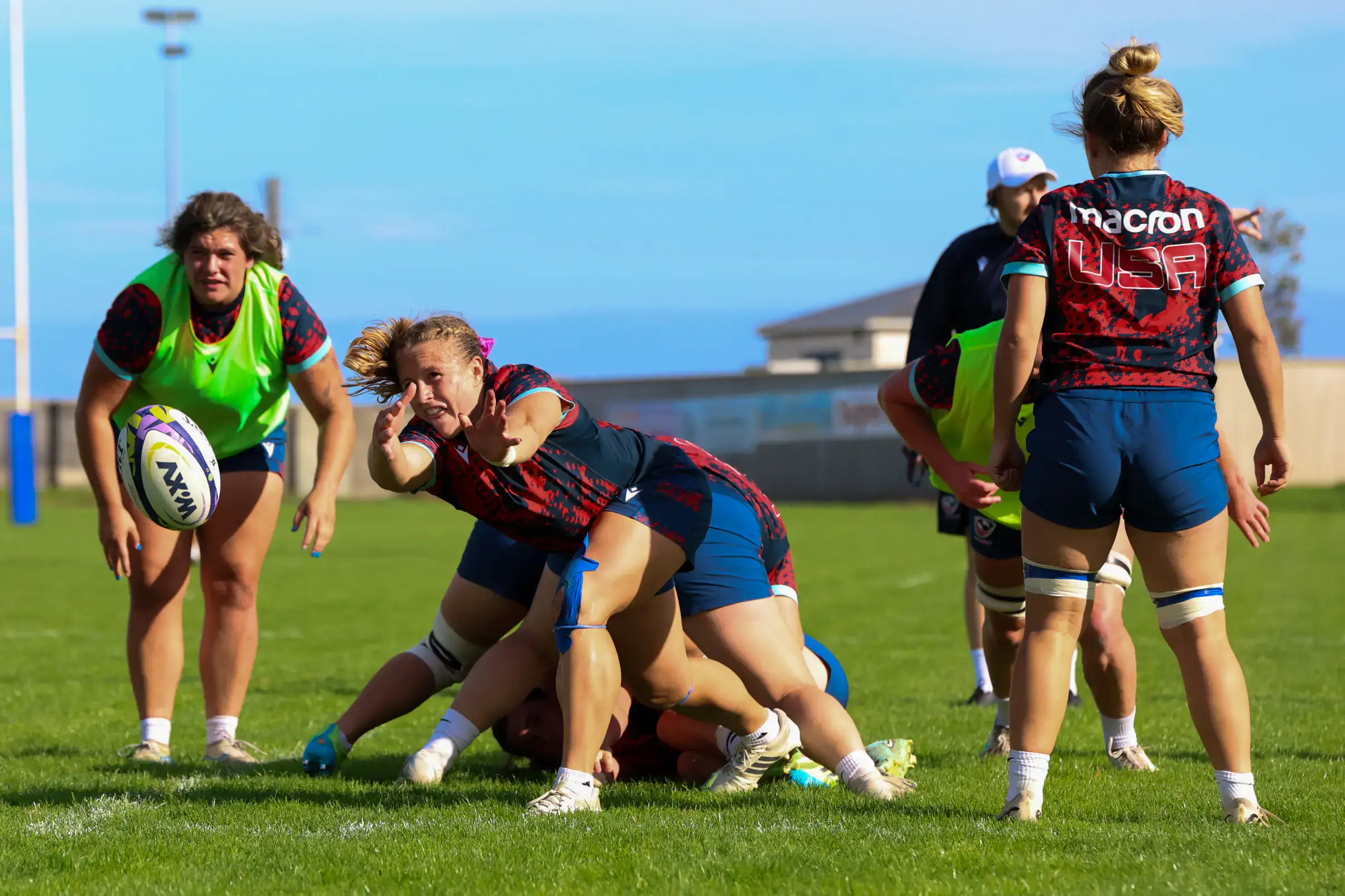
Women’s Eagles Head to Dublin Looking to Turn Recent Progress Into a Statement Against a Resurgent Ireland
Women’s Eagles begin their WXV campaign against an Irish side carrying confidence, physicality and growing expectations into a new era of international women’s rugby.
The USA Women’s Eagles open their 2026 WXV Global Series campaign on Sunday with a difficult trip to Dublin, where they will face Ireland at Tallaght Stadium. It is the first match of the revamped WXV Global Series for both teams and an early opportunity to measure themselves against opposition carrying genuine momentum into the autumn international window. The match also marks the first women’s Test staged at Tallaght Stadium.
Match details
- Match: Ireland Women vs. USA Women
- Date: Sunday, September 20, 2026
- Venue: Tallaght Stadium, Dublin
- Kickoff: 1:45 p.m. local / 8:45 a.m. ET; USA Rugby lists Paramount+ as the U.S. broadcast home for the Eagles’ WXV campaign.
A New-Look USA Beginning to Find Its Identity
There has been a noticeable change surrounding the Women’s Eagles under head coach Jack Hanratty. The results are still developing, but the Americans have shown encouraging signs that they are beginning to establish a more aggressive and expansive identity.
Perhaps the clearest example came against Australia during the Pacific Four Series in April. After opening the competition with a 48-15 defeat to New Zealand, the Eagles responded by beating the Wallaroos 33-12 in Kansas City, scoring five tries in what became Hanratty’s first victory as USA head coach. The performance featured improved handling, sustained pressure and the type of attacking ambition the Eagles have been trying to make part of their identity.
That progress continued during July’s two-Test tour of South Africa. The Eagles lost the opener 34-21 but responded a week later with a 26-19 victory at Loftus Versfeld, splitting the series. Hope Rogers scored twice through the USA’s forward power while Telesi Uhatafe provided the attacking spark out wide, and the Eagles defended their own line late to secure an important win away from home.
Those performances should give the Americans confidence heading into Dublin. The challenge now is producing that level of rugby consistently against an Irish team that has made significant strides of its own.
Ireland’s Rise Continues
Ireland enter the WXV Global Series after finishing third in the 2026 Women’s Six Nations, and their performances suggest a team increasingly comfortable with both its identity and its ambitions.
Scott Bemand’s side won three of its five Six Nations matches, beating Italy 57-20, Wales 33-12 and Scotland 54-5. That final victory came in front of a record crowd of 31,294 at the Aviva Stadium and completed an Irish campaign in which the team scored a national Six Nations record 25 tries and 163 points.
At the center of Ireland’s rise is Aoife Wafer. The 23-year-old was named Women’s Six Nations Player of the Championship for the second consecutive year and gives Ireland an explosive carrier capable of generating momentum almost anywhere on the field. Alongside captain Erin King and Brittany Hogan, Ireland possess a back row capable of creating enormous problems at the breakdown and with ball in hand.
For the United States, slowing that Irish back row may be the single most important defensive assignment of the afternoon. Allow Ireland quick ball and Wafer, King and Hogan can put a defense into retreat quickly. Force Ireland into slower possession, however, and the Eagles can give themselves opportunities to attack the breakdown and disrupt Ireland’s rhythm.
The American Pack Has to Set the Tone
There may be no better place for the USA to establish itself than up front.
The WXV squad contains plenty of experience and physicality, including Hope Rogers, Kathryn Treder, Hallie Taufoou, Georgie Perris-Redding, Freda Tafuna, Erica Jarrell-Searcy and veteran Kate Zackary. Rogers in particular remains an important weapon close to the line, while Tafuna gives the Eagles the sort of dynamic carrying ability that can turn seemingly ordinary possession into front-foot ball.
The scrum and maul could therefore become a fascinating part of Sunday’s contest. Ireland have increasingly based their attack around the ability of their forwards to win collisions and exhaust defenses through repeated carries. Against Wales in May, that forward pressure became decisive as the match progressed.
USA cannot afford merely to survive those exchanges. They need to make Ireland work.
If the American forwards can generate clean ball, the Eagles have enough athleticism behind the scrum to make the game uncomfortable for Ireland.
Bella Vogel and the USA Attack
One of the most intriguing players in the American squad is 19-year-old Bella Vogel. World Rugby identified the young playmaker as the USA player to watch entering the Global Series after she started throughout the Pacific Four Series and featured against South Africa.
Vogel represents much of what the new-look Eagles are trying to become: young, ambitious and willing to attack.
Around her are experienced weapons including Kayla Canett, and Emily Henrich, along with emerging players such as Telesi Uhatafe. The USA showed against South Africa that when their handling holds up and their forwards produce quick possession, they have the athletes to threaten defenses across the width of the field.
Against Ireland, however, patience will matter just as much as ambition. Trying to manufacture something on every phase could play directly into an Irish defense looking for turnovers. The Eagles will need to identify when the opportunity to attack is genuinely there and when possession, territory and another phase are the better options.
Discipline Could Decide It
The previous meeting between these teams provides an obvious warning for the United States.
At WXV 1 in Vancouver in 2024, the Eagles led Ireland 14-7 at halftime, with Hope Rogers scoring twice. USA remained in the contest deep into the second half before discipline dramatically changed the match. The Eagles received three yellow cards during the second half, Ireland were awarded a penalty try, and the Irish eventually pulled away to win 26-14. (World Rugby)
It is difficult to find a clearer lesson.
The USA demonstrated that day that they could physically compete with Ireland. What they could not do was maintain enough discipline to finish the job.
Two years later, the Eagles return to the matchup with another opportunity to test how far they have progressed. Penalties around the breakdown, repeated infringements close to the line and unnecessary cards could be particularly damaging against an Irish side that is significantly more confident than it was during that previous meeting.
What to Expect in Dublin
This match should provide a fascinating contrast.
Ireland will likely want to use its powerful pack to create momentum before bringing its backs into the game against a retreating defense. The USA, meanwhile, will want physical parity up front while creating enough quick possession to release its athletic backline into space.
For the Eagles, the formula is relatively straightforward: compete at the set piece, slow Ireland’s ball, remain disciplined and take attacking opportunities when they appear. If the USA can turn the match into an 80-minute contest rather than allowing Ireland to build extended periods of territorial pressure, the Americans possess enough power and pace to make things uncomfortable.
Ireland, though, enters with considerable momentum. A third-place Six Nations finish, a record-setting attacking campaign and one of the world’s most dangerous back rows provide a substantial challenge for a USA side still developing under a new coaching staff. Ireland were listed fifth in the world entering the WXV window, illustrating how far Bemand’s team has climbed.
For the Women’s Eagles, that is exactly what makes Sunday so valuable.
WXV is about more than one result. With Wales awaiting six days later and home fixtures against Italy and England coming in October, Dublin begins an important stretch in the development of the American program.
A strong performance against Ireland would be another indication that the flashes shown against Australia and South Africa are becoming something more permanent. And after leading Ireland at halftime the last time these sides met, the Eagles will know they do not have to imagine what competing with the Irish looks like.
This time, the challenge is doing it for all 80 minutes.

Leave a Reply