
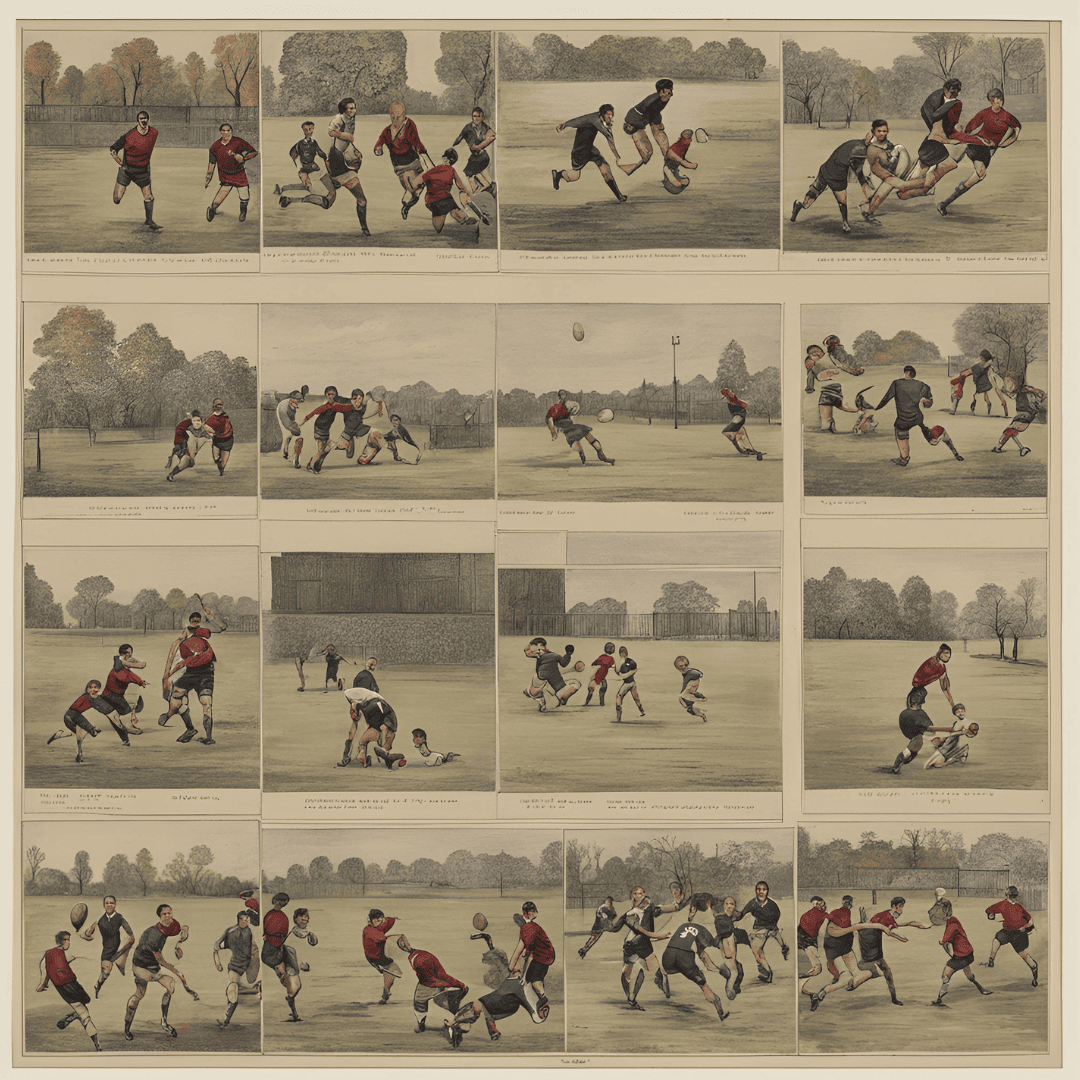
Let’s Begin Rugby 101 …
Rugby is a sport with a rich history, known for its physicality, strategic depth, and unique culture. Played by millions around the world, it has a devoted following in countries like New Zealand, England, South Africa, and Australia, among others. For those new to the game, understanding the basics of rugby can seem daunting due to its specific terminology, rules, and variations. This article will guide you through the fundamentals of rugby, from its origins and different types to the rules, positions, and strategies that make the game so captivating.
The Origins of Rugby
Rugby traces its origins to the early 19th century in England. According to popular legend, the game began in 1823 when a student at Rugby School, William Webb Ellis, picked up a soccer ball and ran with it during a match. While this story is more myth than fact, it is widely recognized as the symbolic birth of rugby. The sport gradually evolved, and by the mid-19th century, the first formal rules were established. In 1871, the Rugby Football Union (RFU) was founded in England, marking the official start of rugby as an organized sport.
The Two Main Forms of Rugby
Rugby has evolved into two main forms: Rugby Union and Rugby League. While both share common roots, they have distinct rules and styles of play.
Rugby Union: This is the most widely played form of rugby. It features 15 players on each team and is known for its emphasis on physicality, strategy, and set pieces like scrums and lineouts. Rugby Union is played at both amateur and professional levels, with the Rugby World Cup being one of the sport’s most prestigious tournaments.
Rugby League: Rugby League, while similar to Rugby Union, has 13 players per team and is generally faster paced with fewer stoppages. It emphasizes continuous play, with scrums being less common and often less contested. Rugby League is particularly popular in parts of England and Australia.
For the purpose of this introduction, we’ll focus primarily on Rugby Union, as it is the most common form of the sport globally.
Basic Rules of Rugby Union
Rugby Union is a complex sport with many rules but understanding a few key principles can help you get started.
Objective: The primary goal in rugby is to score more points than the opposing team. This can be done by carrying the ball over the opponent’s goal line and grounding it (a try), kicking the ball through the opponent’s goalposts (a conversion, penalty, or drop goal), or by forcing the opponent into errors.
Scoring:
– Try: A try is worth 5 points and is scored when a player grounds the ball in the opponent’s in-goal area (the area behind the goalposts and between the touchlines).
– Conversion: After scoring a try, the scoring team attempts a conversion kick, which is worth 2 additional points if successful. The kick is taken from a point in line with where the try was scored.
– Penalty Kick: Awarded after certain infringements by the opposition, a penalty kick is worth 3 points if successfully kicked through the goalposts.
– Drop Goal: A drop goal is worth 3 points and is scored when a player kicks the ball through the goalposts during open play after it has bounced on the ground.
Passing and Possession: The ball can be passed in any direction, but it must not travel forward from the hands of the passer. The only way to advance the ball forward is by running with it or kicking it.
Tackling: Tackling the ball carrier is one of the most important aspects of defense in rugby. Once tackled, the ball carrier must release the ball, and play continues with other players attempting to secure possession.
Set Pieces: There are two primary set pieces in rugby—scrums and lineouts.
– Scrum: A scrum is used to restart play after certain minor infractions, such as a forward pass. Eight players from each team bind together and push against the opposing team to gain possession of the ball, which is introduced into the scrum by the scrumhalf.
– Line-Out: A line-out occurs when the ball goes out of bounds. Players from both teams line up parallel to the touchline, and the ball is thrown back into play. The teams then compete in the air to catch the ball.
Rucks and Mauls: These are two forms of contested play that occur after a tackle.
– Ruck: A ruck forms when the ball is on the ground, and one or more players from each team compete for possession by pushing against each other while trying to secure the ball with their feet.
– Maul: A maul occurs when the ball carrier is held up by an opponent but not tackled to the ground, and teammates join to push against the opposition.
The Positions in Rugby Union
Understanding the different positions in rugby is crucial to understanding the game. A rugby union team is divided into forwards and backs, each with specific roles.
Forwards: The forwards are typically the larger, stronger players who are involved in the physical contests, such as scrums and lineouts. The forwards are split into the front row, second row, and back row.
– Front Row: Comprises the loosehead prop, hooker, and tighthead prop. These players are crucial in scrums.
– Second Row: Consists of two locks, who provide power in scrums and are often key players in line-outs due to their height.
– Back Row: Includes two flankers and the number eight. These players are versatile, involved in both defense and attack, and are often key ball carriers.
Backs: The backs are generally faster, more agile players responsible for orchestrating the team’s attack and defending against the opposition’s backs.
– Halfbacks: The scrumhalf and fly-half are pivotal in directing play. The scrumhalf controls the distribution of the ball, while the fly-half typically makes tactical decisions and is often the primary kicker.
– Centers: The inside and outside centers are key in breaking through the opposition’s defense and supporting the wingers in attack.
– Wings: The left wing and right wing are positioned on the outside and are often the fastest players on the team, responsible for finishing attacks.
– Fullback: The fullback is positioned behind the main line of defense and is crucial in fielding opposition kicks and initiating counterattacks.
Basic Strategies and Tactics
Rugby is not just about physicality; it’s a game of strategy and tactics. Teams must balance offense and defense, using set pieces, open play, and kicking to control the game.
Attack: Successful attacking play in rugby often involves moving the ball quickly through the hands of the backs to create space and outflank the defense. Teams may also use kicking strategies to gain territory or put pressure on the opposition.
Defense: A strong defense is vital in rugby. Teams must be organized, with players working together to tackle and disrupt the opposition’s attack. Defensive lines are carefully maintained to prevent gaps that the attacking team could exploit.
Kicking: Kicking is a critical part of rugby strategy. It can be used to gain territory, relieve pressure, or set up attacking opportunities. The fly-half and fullback are often the primary kickers, but any player can kick the ball during open play.
Set Pieces: Set pieces like scrums and lineouts are crucial in establishing a platform for attack. Winning these contests gives a team possession and the opportunity to dictate the pace of the game.
The Culture of Rugby
Rugby is more than just a sport; it’s a culture that emphasizes respect, teamwork, and camaraderie. The sport is known for its values of fair play and sportsmanship, both on and off the field. The “rugby ethos” is a defining feature of the game, with players, coaches, and fans all embracing a spirit of respect for the opposition, the referee, and the game itself.
Rugby also has a strong social aspect, with traditions such as post-match gatherings where players from both teams come together to celebrate the game, regardless of the result. This sense of community is a key part of what makes rugby special, fostering lifelong friendships and a deep connection to the sport.
Rugby is a sport that combines physicality, strategy, and a rich cultural tradition. Whether you’re a new fan or a seasoned player, understanding the basics of the game is the first step towards appreciating its depth and excitement. From the structure of the game to the roles of each position, rugby offers a unique and rewarding experience for all who engage with it. Whether you’re watching a match, playing with friends, or just learning about the sport, rugby’s blend of athleticism, skill, and camaraderie makes it one of the most beloved sports in the world.

Leave a Reply